What Do Great White Sharks Eat? Fascinating Facts About These Apex Predators

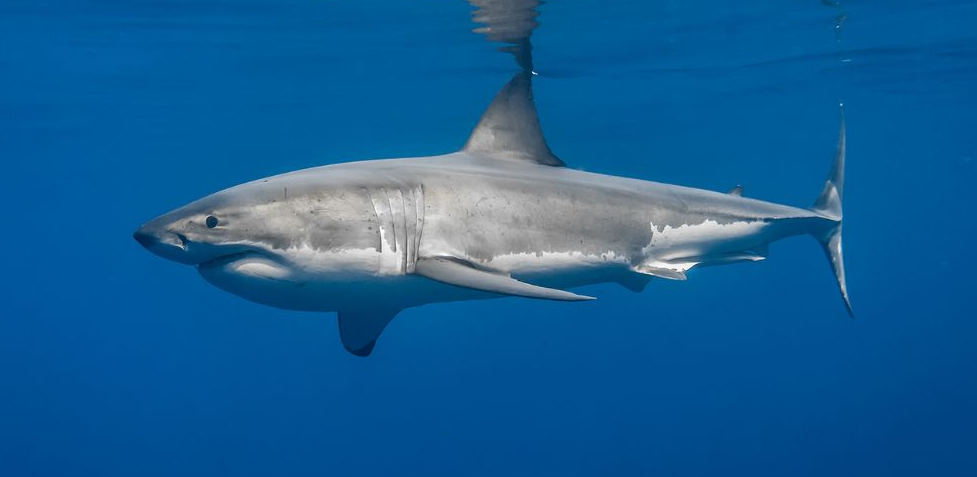
Great white sharks are among the most powerful and feared predators in the ocean. Known for their massive size, sharp teeth, and incredible hunting abilities, these sharks have fascinated humans for decades. Movies and documentaries often portray great white sharks as dangerous killing machines, but in reality, they are intelligent apex predators that play an essential role in maintaining balance within marine ecosystems. One of the most common questions people ask is: what do great white sharks eat?
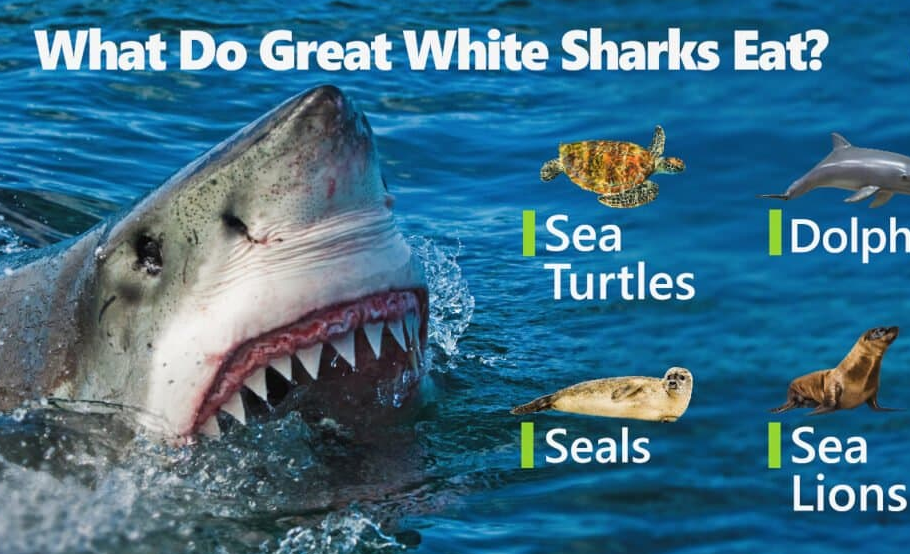
Great white sharks are carnivores, meaning they survive entirely on other animals. Their diet changes throughout their lives and depends on factors such as age, size, habitat, and prey availability. Young great white sharks mainly eat fish and smaller marine animals, while adults hunt larger prey such as seals, sea lions, dolphins, and even whale carcasses. Their ability to adapt their diet helps them survive in different ocean environments around the world.
In this complete guide, we will explore fascinating facts about the diet and feeding habits of great white sharks. You will learn what great white sharks eat in the wild, how they hunt prey, how much food they consume, and how their diet changes as they grow. We will also discuss their role in marine ecosystems, threats to their food sources, and common myths about these incredible apex predators.
What Is the Main Diet of Great White Sharks?
The diet of great white sharks varies depending on their age and size. Young great white sharks mainly feed on fish such as tuna, rays, smaller sharks, and mackerel. These prey animals are easier for juvenile sharks to catch and provide the nutrients needed for growth and development.
As great white sharks mature, they begin hunting larger marine mammals. Adult sharks commonly prey on seals, sea lions, dolphins, and porpoises because these animals contain large amounts of fat and energy-rich blubber. High-fat prey helps adult sharks maintain energy for long-distance swimming and survival in colder waters.
Great white sharks are opportunistic predators, meaning they eat whatever suitable prey is available in their environment. In addition to live prey, they sometimes feed on dead animals such as whale carcasses. Their adaptable feeding behavior allows them to survive in oceans across the globe.
Why Great White Sharks Are Apex Predators
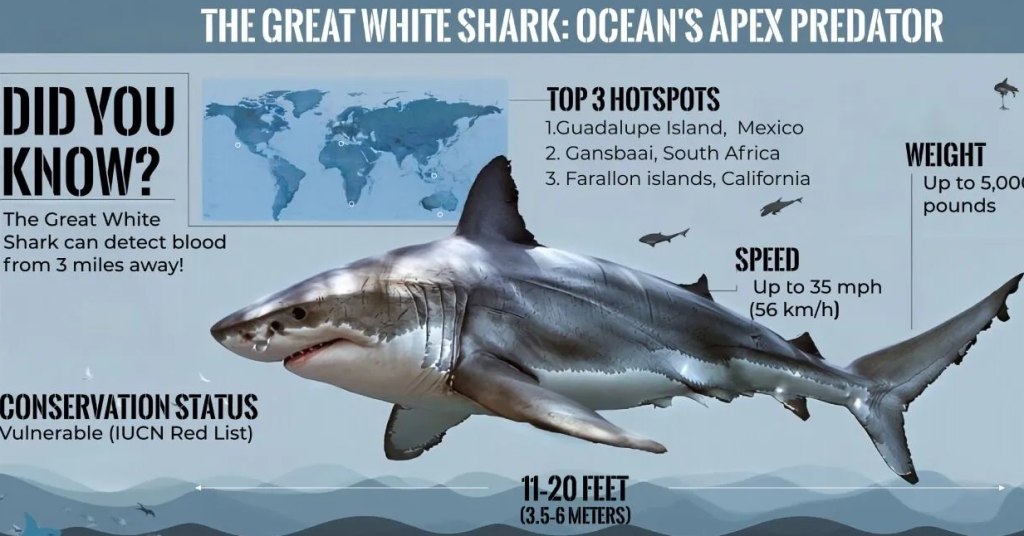
Great white sharks are considered apex predators because they sit at the top of the marine food chain. Very few animals hunt adult great white sharks, allowing them to control populations of many marine species. Their role as top predators helps maintain balance in ocean ecosystems.
One reason great white sharks are such effective predators is their incredible physical design. They have powerful jaws lined with rows of sharp, serrated teeth capable of tearing through flesh and bone. Their muscular bodies and strong tails allow them to swim at high speeds when attacking prey.
Great white sharks also possess highly advanced senses. They can detect tiny vibrations in the water, smell blood from long distances, and sense electrical signals produced by other animals. These abilities make them extremely efficient hunters in various marine environments.
What Fish Do Great White Sharks Eat?
Fish make up a major portion of the diet for younger great white sharks. Tuna, mackerel, herring, rays, skates, and smaller sharks are common prey items. Fish provide important nutrients and are easier for juvenile sharks to hunt before they become large enough to attack marine mammals.
Some great white sharks continue eating fish even after reaching adulthood. Large fish species such as tuna are rich in protein and healthy fats, making them valuable food sources. In some regions, seasonal fish migrations attract great white sharks to specific feeding grounds.
Great white sharks often attack fish using sudden bursts of speed from below. Their dark upper bodies help them blend into the ocean depths, making it difficult for prey to detect them. This camouflage gives sharks an advantage during hunting.
Do Great White Sharks Eat Seals and Sea Lions?
Seals and sea lions are among the favorite prey of adult great white sharks. Marine mammals contain thick layers of fat called blubber, which provide large amounts of energy. This energy-rich food is especially important for adult sharks that travel long distances through cold ocean waters.
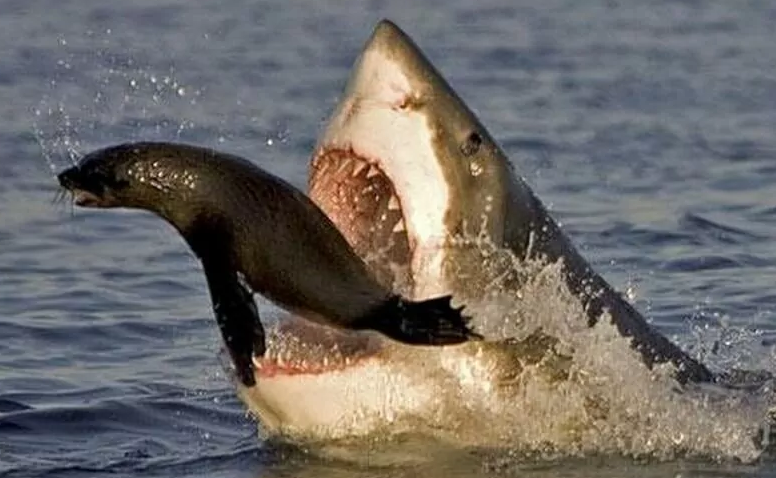
Great white sharks often hunt seals near seal colonies and coastal islands. One famous hunting strategy involves attacking from below at extremely high speed. Sharks may launch themselves partially out of the water during these powerful surprise attacks, creating dramatic scenes often captured in documentaries.
Sea lions are also common prey for great white sharks in many coastal regions. However, hunting large marine mammals can be dangerous because prey may fight back. Sharks usually target weaker, injured, or younger animals to reduce the risk of injury during attacks.
How Great White Sharks Hunt Their Prey
Great white sharks are ambush predators that rely on stealth and speed when hunting. They often approach prey from below, where they are harder to see against the dark ocean depths. Once close enough, the shark attacks with incredible force and speed.
Sharks use several senses while hunting. Their sense of smell helps detect blood and body fluids in the water, while their lateral line system senses vibrations caused by struggling prey. They also possess electroreceptors called ampullae of Lorenzini, which allow them to detect tiny electrical signals from nearby animals.
Unlike many predators, great white sharks do not always kill prey instantly. In some cases, they bite prey once and wait for it to weaken from blood loss before returning to feed. This strategy helps reduce the risk of injury from struggling prey animals.
Do Great White Sharks Eat Dolphins?
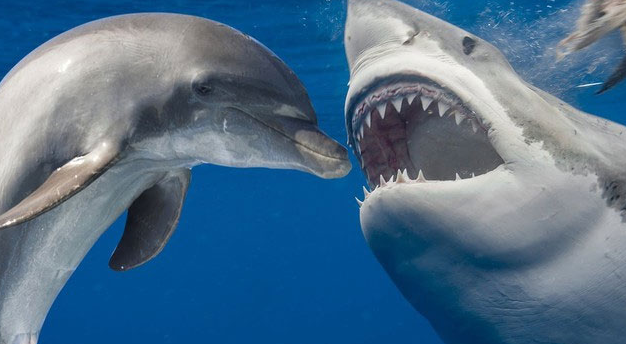
Great white sharks sometimes prey on dolphins, although dolphins are intelligent and difficult to catch. Dolphins are fast swimmers that often travel in groups, making them more challenging targets than seals or fish.
When sharks attack dolphins, they usually rely on surprise and powerful bites. Dolphins have been known to defend themselves using teamwork and speed, and some dolphin pods can even chase sharks away. Because of this, sharks may avoid attacking healthy adult dolphins unless an opportunity presents itself.
Despite the risks, dolphins remain part of the natural diet of some great white sharks. Predatory interactions between sharks and dolphins help maintain balance within marine ecosystems and demonstrate the complex relationships among ocean predators.
How Much Food Do Great White Sharks Eat?
Great white sharks do not need to eat every day like humans or many mammals. A single large meal can provide enough energy for several days or even weeks. Adult sharks may consume up to 11 tons of food annually, depending on size and environmental conditions.
Young sharks eat more frequently because they are growing rapidly. Juvenile sharks rely on regular feeding to support development and maintain energy levels. Adult sharks, however, can survive longer periods without food due to their slower metabolism and efficient energy storage.
Large prey items such as seals provide enormous amounts of calories. After consuming a large meal, great white sharks may travel long distances before needing to hunt again. Their feeding habits are closely connected to migration patterns and prey availability.
What Do Baby Great White Sharks Eat?
Baby great white sharks, often called pups, are born as fully developed predators. Unlike mammals, sharks do not nurse their young. Immediately after birth, young sharks must survive independently and hunt for their own food.
Juvenile great white sharks mainly eat smaller fish, rays, squid, and small sharks. These prey animals are easier for young sharks to capture while they develop hunting skills and grow stronger.
As young sharks increase in size, their diet gradually shifts toward larger prey. This dietary transition helps them gain the energy needed to support rapid growth and prepare for adulthood as apex predators.
Do Great White Sharks Scavenge for Food?
Although great white sharks are skilled hunters, they are also scavengers when opportunities arise. Whale carcasses are an important occasional food source because they provide massive amounts of fat and nutrients.
When a whale dies and sinks or floats in the ocean, sharks may gather to feed on the carcass for days. Scavenging allows sharks to conserve energy compared to actively hunting live prey.
Great white sharks are opportunistic feeders, meaning they take advantage of available food sources whenever possible. This flexibility improves survival and helps them adapt to changing marine conditions.
Seasonal Changes in Great White Shark Diets
The feeding habits of great white sharks often change throughout the year due to seasonal prey migrations. In some regions, sharks follow seal populations or fish migrations to locate food-rich areas.
During colder seasons, marine mammals may become more important in the shark diet because high-fat prey provides extra energy. Warmer months may bring increased access to fish populations near coastlines.
Ocean temperatures, currents, and prey availability all influence shark feeding behavior. Scientists use tracking technology to study how sharks migrate and adapt their diets throughout the year.
Threats to Great White Shark Food Sources
Overfishing is one of the biggest threats to great white shark food supplies. Commercial fishing reduces populations of fish and marine mammals that sharks rely on for survival. Declining prey availability can affect shark migration and reproduction.
Pollution also harms marine ecosystems and prey populations. Plastic waste, oil spills, and chemical contamination damage ocean habitats and may poison animals within the food chain.
Climate change presents another major challenge for great white sharks. Rising ocean temperatures can alter migration patterns and disrupt marine food webs. Changes in prey distribution may force sharks to travel farther in search of food.
The Role of Great White Sharks in Marine Ecosystems
Great white sharks play a critical role in maintaining healthy marine ecosystems. As apex predators, they help regulate populations of seals, fish, and other marine animals.
By targeting weak or sick prey, sharks may contribute to healthier prey populations. Their presence also influences the behavior of marine animals, preventing overgrazing and supporting biodiversity in ocean habitats.
Without apex predators like great white sharks, marine ecosystems could become unbalanced. Protecting shark populations is important for preserving healthy oceans and maintaining ecological stability.
Fascinating Facts About Great White Shark Feeding Habits
Great white sharks can detect a single drop of blood in large amounts of water thanks to their powerful sense of smell. This ability helps them locate injured prey from long distances.
Some great white sharks breach completely out of the water while attacking prey. These dramatic hunting leaps are most common near seal colonies and demonstrate the incredible speed and strength of these predators.
Despite their fearsome reputation, great white sharks rarely attack humans intentionally. Most human bites are believed to be cases of mistaken identity, where the shark mistakes a surfer or swimmer for prey such as a seal.
Common Myths About Great White Shark Diets
Many people believe great white sharks are mindless killing machines, but this is not true. Sharks are intelligent predators that hunt primarily for survival rather than aggression.
Another common myth is that sharks constantly hunt humans. In reality, humans are not a natural part of the great white shark diet. Most sharks avoid people whenever possible and focus on their normal marine prey.
Movies and media have exaggerated the danger posed by great white sharks. Understanding what these sharks actually eat helps reduce fear and promotes appreciation for their role in ocean ecosystems.
Conclusion
Great white sharks are fascinating apex predators with highly adaptable diets and advanced hunting abilities. From fish and squid to seals and dolphins, these powerful animals consume a wide variety of prey depending on their age, size, and environment.
Their role as top predators is essential for maintaining balance within marine ecosystems. By regulating prey populations and influencing marine food webs, great white sharks help support healthy oceans and biodiversity.
Understanding what great white sharks eat provides valuable insight into the complexity of ocean ecosystems and the importance of shark conservation. As threats such as overfishing, pollution, and climate change continue to affect marine life, protecting great white sharks and their food sources remains critical for the future of the world’s oceans.