What Do Ants Eat? Inside the Busy World of These Tiny Foragers

Ants are among the most successful creatures on Earth. Found on nearly every continent except Antarctica, these tiny insects thrive in forests, deserts, grasslands, and even inside our homes. But have you ever stopped to wonder: what do ants eat?
The answer is surprisingly complex. Ants are highly adaptable omnivores, meaning they consume both plant-based and animal-based foods. Different species have evolved specialized diets depending on their environment, colony size, and survival needs. Some ants prefer sugary liquids, while others hunt insects, farm fungi, or even raise aphids like tiny livestock.
During years of observing wildlife behavior, I’ve always been fascinated by how organized ants become when food is involved. A single crumb dropped on the ground can quickly trigger a coordinated operation involving scouts, workers, and chemical communication. Their efficiency rivals that of much larger animals.
In this guide, we’ll explore everything about the diet of ants, including what ants eat in the wild, what ants eat indoors, how baby ants are fed, seasonal feeding habits, and the unusual foods certain species rely on for survival.
Understanding the Ant Diet
Ants Are Opportunistic Omnivores
One reason ants are so widespread is their incredible flexibility when it comes to food. Most ants are opportunistic omnivores, meaning they will eat nearly anything edible they can find. This adaptability allows colonies to survive in constantly changing environments.
In nature, ants consume a mixture of sugars, proteins, fats, seeds, nectar, fungi, and small animals. Worker ants continuously search for food sources and bring them back to the colony to share with the queen, larvae, and other workers. Some species even store food for future use.
Their dietary needs often depend on the colony’s stage of development. Adult ants typically crave carbohydrates for energy, while larvae require protein-rich meals to support rapid growth. This division of nutritional needs helps explain why ants gather such a wide variety of foods.
Why Food Is Essential for Colony Survival
Food is more than just fuel for ants—it determines whether an entire colony survives. A healthy colony may contain thousands or even millions of individuals, all depending on a steady food supply.
Worker ants spend much of their lives searching for meals. Scouts locate food and leave pheromone trails to guide other ants to the source. The stronger the trail, the more ants join the feeding effort. This system allows colonies to exploit food quickly and efficiently.
Without enough food, colonies weaken rapidly. Queens may stop laying eggs, larvae may fail to develop, and worker ants become less active. In extreme conditions, colonies may relocate entirely in search of better feeding opportunities.
Ant Diets Vary by Species
Not all ants eat the same foods. Some species specialize in hunting insects, while others focus on seeds or sweet liquids. Environmental conditions also influence dietary preferences.
For example, carpenter ants are known for feeding on sugary substances and dead insects, while fire ants aggressively hunt live prey. Harvester ants gather seeds, and leafcutter ants cultivate fungus gardens underground.
This dietary diversity is one of the main reasons ants are found in such a wide range of habitats across the globe.
What Do Ants Eat in the Wild?
Sugary Foods and Plant Nectar
Many ants are strongly attracted to sweet foods because sugar provides quick energy for active workers. In the wild, nectar from flowers is one of the most common carbohydrate sources.
Ants also collect honeydew, a sugary liquid produced by aphids and other sap-feeding insects. Some ant species protect aphids from predators in exchange for this sweet reward. Scientists often compare this relationship to farming because ants essentially “raise” aphids for food.
Tree sap, ripe fruits, and plant secretions also contribute to the natural ant diet. During warmer months, sugary resources become especially important as colonies expand and worker activity increases.
Insects and Animal Protein
Protein is essential for developing larvae, which means ants frequently hunt or scavenge other insects. Many species feed on flies, caterpillars, termites, beetles, spiders, and even dead animals.
Some ants are fierce predators. Army ants, for example, travel in massive swarms capable of overwhelming insects, reptiles, and small mammals. Fire ants also aggressively attack living prey using painful stings.
In my own observations outdoors, I’ve watched ants dismantle dead insects with remarkable speed. Within hours, dozens of workers can strip a beetle down to almost nothing, carrying tiny pieces back to the nest.
Seeds, Grains, and Fungi
Certain ants consume plant materials directly. Harvester ants gather seeds and store them in underground chambers, creating natural food reserves for difficult seasons.
Leafcutter ants have one of the most extraordinary diets in the insect world. Instead of eating leaves directly, they use leaf fragments to cultivate fungus gardens. The fungus becomes the colony’s primary food source.
This farming behavior demonstrates the incredible intelligence and specialization ants have evolved over millions of years.
What Do Ants Eat Indoors?
Crumbs and Human Food
When ants invade homes, they are usually searching for easily accessible food. Tiny crumbs, spilled drinks, and uncovered snacks can attract entire colonies.
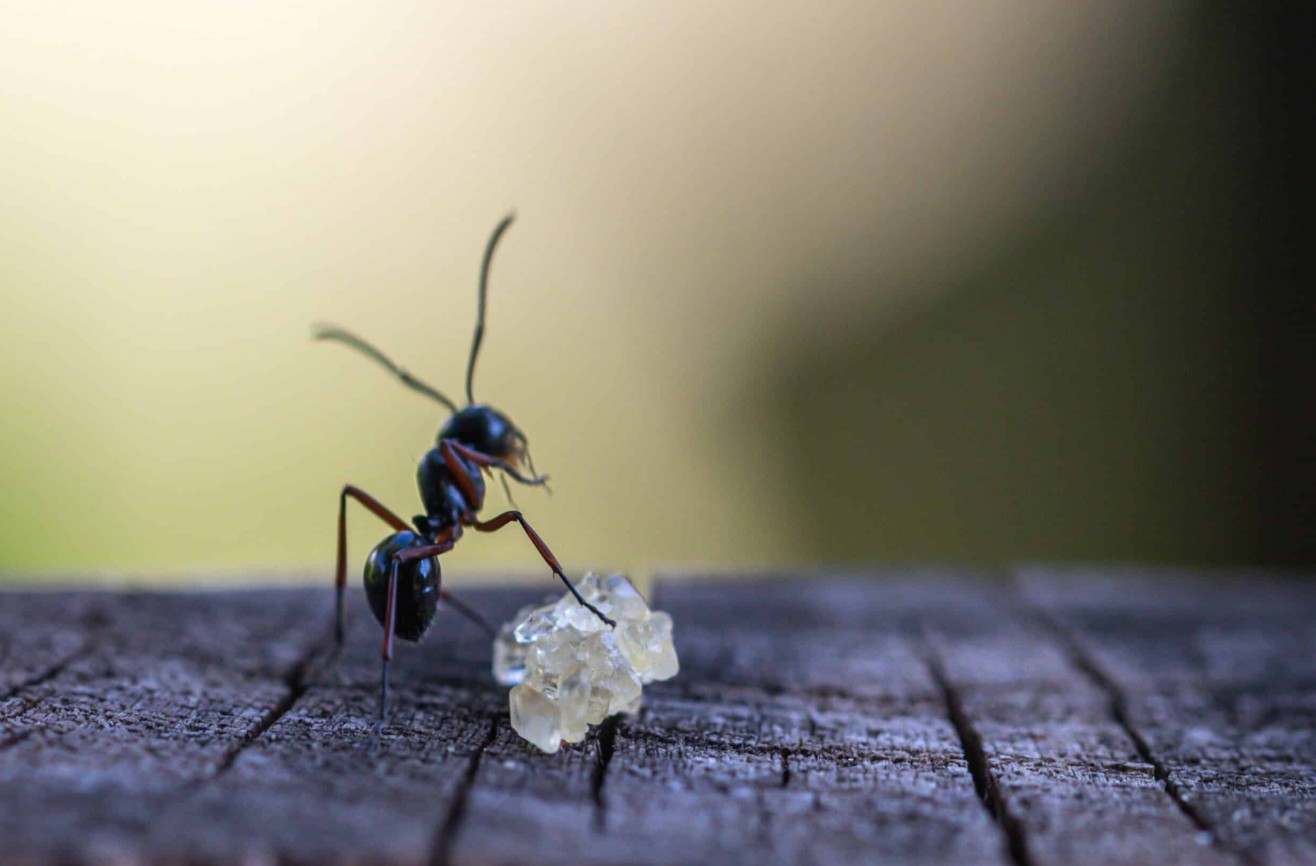
Sugar-rich foods are especially appealing. Ants commonly feed on candy, syrup, soda, honey, and fruit juice. Even microscopic traces of sugar can lure scouts indoors.
Protein-based foods are also attractive. Pet food, meat scraps, grease, and peanut butter are common targets for household ants.
Why Kitchens Attract Ants
Kitchens provide nearly perfect feeding conditions for ants. Moisture, warmth, and food availability make these areas ideal for foraging.
Once a scout discovers food, it leaves a pheromone trail leading back to the colony. Soon afterward, large numbers of ants follow the same route repeatedly.
This is why homeowners often see organized lines of ants moving between food sources and hidden nests. Removing the trail and eliminating food access are crucial for preventing infestations.
Seasonal Indoor Feeding
Ant activity indoors often increases during extreme weather conditions. During droughts or cold seasons, ants may enter buildings searching for food and water.
In summer, sugary liquids attract ants more frequently. During colder months, they may seek out protein-rich foods to sustain colony survival.
Understanding these seasonal feeding behaviors can help explain why ant infestations appear at certain times of the year.
What Do Baby Ants Eat?
The Role of Worker Ants
Baby ants, known as larvae, cannot feed themselves. Worker ants are entirely responsible for gathering, processing, and delivering food to developing young.
Adult ants chew or break down food into digestible pieces before feeding larvae. In some species, workers regurgitate partially digested food in a process called trophallaxis.
This constant care ensures the colony’s future generations develop properly.
Protein Is Essential for Growth
Unlike adult ants, which mostly require energy-rich carbohydrates, larvae need protein to grow. This is why worker ants prioritize insects and other protein sources when feeding young ants.
Larvae consume crushed insects, animal tissue, eggs, and other nutrient-rich foods. Colonies with abundant protein supplies tend to produce healthier workers and more reproductive ants.
Protein shortages can slow colony growth dramatically and reduce survival rates.
Queens and Royal Nutrition
Future queens receive special diets that help them grow larger and become reproductive adults. In many species, royal larvae are fed more frequently and receive richer nutrition than ordinary workers.
This nutritional difference plays a direct role in determining caste development inside the colony.
It’s fascinating how something as simple as diet can influence whether an ant becomes a worker, soldier, or queen.
Do Ants Have Favorite Foods?
Sugar Is a Top Preference
Most ant species strongly prefer sugary foods because carbohydrates provide fast energy. This explains why ants quickly gather around sweets during picnics or outdoor gatherings.
Honey, fruit, nectar, and syrup are among their favorite energy sources. Some ants can detect sugar from impressive distances using sensitive antennae.
Their attraction to sugar is one reason ants become such persistent household pests.
Protein Cravings Change Over Time
Ant colonies often shift food preferences depending on their developmental stage. Colonies raising large numbers of larvae crave more protein, while mature colonies may focus more heavily on carbohydrates.
Researchers have observed that ant foraging behavior changes dynamically based on the colony’s nutritional needs.
This flexibility allows ants to survive in unpredictable environments.
Water and Minerals Matter Too
Ants also need water and essential minerals. During hot weather, workers actively search for moisture sources to prevent dehydration.
Some ants consume salty substances or mineral-rich soil to supplement missing nutrients. This behavior highlights how complex ant nutrition truly is.
Even tiny insects require a balanced diet to maintain healthy colonies.
Seasonal Changes in the Ant Diet
Spring and Summer Feeding
Warm weather increases ant activity dramatically. Colonies expand rapidly during spring and summer, requiring large amounts of food.
Sugary liquids, insects, and plant materials become more abundant during these seasons. Worker ants may travel long distances to exploit temporary food sources.
This is also when ant infestations in homes become most noticeable.
Fall Food Storage
As temperatures cool, some ant species begin gathering and storing food for winter survival. Harvester ants especially increase seed collection during autumn.
Worker ants become more focused on preserving colony resources before food availability declines.
This seasonal preparation helps colonies survive difficult environmental conditions.
Winter Survival Strategies
In colder climates, many ants reduce activity during winter. Colonies retreat deeper underground where temperatures remain more stable.
Some species survive on stored food reserves, while others enter semi-dormant states requiring minimal energy.
Even during winter, however, colonies remain highly organized beneath the soil.
Strange and Fascinating Foods Ants Eat
Fungus Farming Ants
Leafcutter ants are among the most remarkable insects on Earth because they practice agriculture. Workers cut leaves and transport them underground, not for direct consumption, but to feed cultivated fungi.
The fungus becomes the colony’s main food source. Without it, the colony cannot survive.
This sophisticated farming system evolved millions of years before humans developed agriculture.
Meat-Eating Ants
Certain ants are highly carnivorous and rely almost entirely on animal prey. Army ants conduct coordinated raids that overwhelm insects and small animals.
Some tropical species even hunt collectively, behaving almost like packs of wolves.
Watching these hunting strategies reveals how powerful ants can be despite their small size.
Cannibalism and Survival Feeding
Under extreme starvation conditions, some ants may consume eggs, larvae, or weaker colony members. While disturbing, this behavior helps preserve the colony during severe food shortages.
Nature often forces animals to make harsh survival decisions, and ants are no exception.
These behaviors demonstrate the intense survival pressures insect colonies face in the wild.
How Ants Find Food
Scouts and Pheromone Trails
Ant colonies rely heavily on chemical communication when searching for food. Scout ants explore randomly until they discover a valuable resource.
Once food is located, scouts release pheromones that guide other workers to the site. Stronger trails attract more ants, creating highly organized foraging lines.
This communication system is one of the reasons ants are such efficient foragers.
Teamwork and Coordination
Ants rarely work alone for long. Large food items often require teamwork, with dozens of workers cooperating to transport prey back to the nest.
Their coordination appears almost intelligent, though it emerges from simple communication rules followed collectively.
Scientists continue studying ants to better understand swarm intelligence and group behavior.
Adaptability in Different Habitats
Ants adjust their feeding behavior based on local conditions. Desert ants may travel enormous distances searching for dead insects, while rainforest ants exploit abundant plant nectar and insects.
Urban ants learn to navigate buildings, sidewalks, and human environments with remarkable efficiency.
Their adaptability is a major reason ants dominate ecosystems worldwide.
The Ecological Importance of Ant Feeding Habits
Ants Help Clean Ecosystems
By consuming dead insects and organic matter, ants help recycle nutrients back into ecosystems. Their scavenging behavior reduces waste and speeds decomposition.
Without ants, many natural habitats would accumulate far more decaying material.
They play an essential role in maintaining environmental balance.
Ants Support Plant Growth
Some ants disperse seeds while collecting food, unintentionally helping plants spread to new areas. This relationship benefits both ants and vegetation.
Certain plants even produce nectar specifically to attract protective ants.
These partnerships reveal the deep ecological connections ants share with other organisms.
Ants as Food for Other Animals
Ants are also important prey for birds, reptiles, amphibians, and mammals. Creatures such as anteaters, aardvarks, and pangolins rely heavily on ants for survival.
Because ants occupy such a central role in food webs, their feeding behavior influences entire ecosystems.
Even tiny insects can have enormous ecological importance.
Conclusion
So, what do ants eat? The answer is incredibly diverse. Ants consume sugary liquids, insects, seeds, fungi, plant materials, and even human food scraps. Their diets vary by species, season, habitat, and colony needs.
These tiny insects are far more sophisticated than most people realize. From farming fungus underground to raising aphids for honeydew, ants demonstrate extraordinary survival strategies and teamwork.
The next time you see a trail of ants crossing the ground, remember that you’re witnessing one of nature’s most organized and efficient feeding systems in action. Beneath their small size lies a fascinating world of cooperation, adaptation, and relentless foraging.
FAQs
Do ants eat meat?
Yes. Many ants eat insects, dead animals, and other protein-rich foods. Protein is especially important for growing larvae.
Do ants eat sugar?
Absolutely. Sugar is one of the favorite foods of many ant species because it provides quick energy.
What do ants eat in the house?
Indoor ants commonly eat crumbs, sweets, grease, pet food, and spilled drinks.
Do all ants eat the same food?
No. Different species have different diets. Some specialize in seeds, others hunt insects, and some cultivate fungus.
What do queen ants eat?
Queen ants are fed by worker ants and often receive nutrient-rich food to maintain egg production and colony growth.