What Do Lovebirds Eat? 12 Best Foods Every Lovebird Owner Should Know

Lovebirds are among the most charming and affectionate pet birds you can keep. With their bright colors, playful personalities, and strong bonds with their owners, it’s no surprise that these small parrots have become popular pets worldwide. But if you’re new to caring for these adorable birds, one of the first questions you might ask is: what do lovebirds eat?
A proper diet is essential for keeping lovebirds healthy, active, and happy. In the wild, lovebirds consume a wide variety of foods—from seeds and fruits to greens and small plant matter. As pets, they depend on their owners to provide a balanced diet that meets their nutritional needs.
In this complete guide, we’ll explore what lovebirds eat, the 12 best foods for lovebirds, what foods to avoid, and how to build a balanced daily diet that keeps your feathered friend thriving.
What Do Lovebirds Eat in the Wild?
Before understanding what pet lovebirds should eat, it helps to look at their natural diet.
Lovebirds originate from Africa and nearby islands, where they live in savannas, forests, and grasslands. In the wild, they forage throughout the day for a variety of plant-based foods.
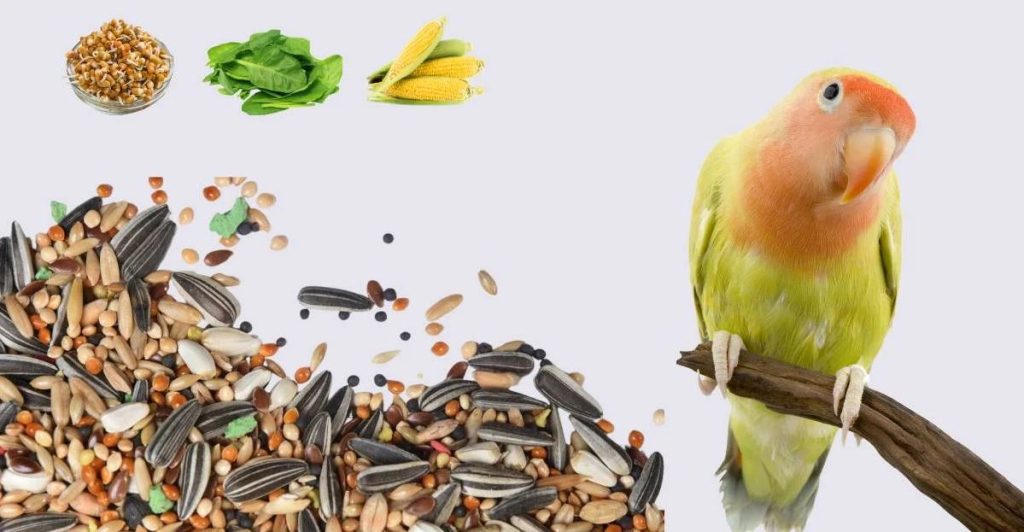
Wild lovebirds typically eat:
- Grass seeds
- Small grains
- Fresh fruits
- Berries
- Leafy greens
- Flower buds
- Vegetation
This diverse diet provides a mixture of proteins, vitamins, minerals, and healthy fats that support their energy levels and strong immune systems.
Because wild lovebirds consume many different foods, pet lovebirds should also receive a varied diet rather than only seeds.
What Do Pet Lovebirds Eat?
Pet lovebirds should eat a balanced diet consisting of several food groups.
A healthy lovebird diet typically includes:
- High-quality pellets
- Fresh fruits
- Vegetables
- Seeds (in moderation)
- Whole grains
- Occasional healthy treats
Pellets usually make up the majority of the diet because they provide complete nutrition. Fresh foods should be offered daily to provide enrichment and additional nutrients.
12 Best Foods Every Lovebird Owner Should Know
Here are the 12 best foods for lovebirds that help maintain their health, energy, and beautiful feathers.
1. High-Quality Pellets
Pellets are widely considered the best staple food for pet lovebirds.
Unlike seed mixes, pellets are formulated to provide balanced nutrition, including:
- Vitamins
- Minerals
- Protein
- Healthy fats
A good rule is to make pellets about 60–70% of your lovebird’s diet.
Pellets also prevent selective eating, where birds pick only their favorite seeds and miss important nutrients.
2. Seeds (In Moderation)
Seeds are a favorite food for lovebirds, but they should be given carefully.
Common seeds include:
- Sunflower seeds
- Millet
- Safflower seeds
- Canary seeds
While seeds provide energy and healthy fats, they are also high in fat. Too many seeds can lead to obesity and nutritional deficiencies.
Ideally, seeds should make up no more than 10–20% of the diet.
3. Apples
Apples are a safe and nutritious fruit for lovebirds.
They provide:
- Vitamin C
- Fiber
- Antioxidants
Always remove the apple seeds, as they contain compounds that can be harmful to birds.
Serve apples in small slices or cubes to make them easy for your lovebird to eat.
4. Carrots
Carrots are packed with beta-carotene, which supports healthy feathers and vision.
Lovebirds enjoy carrots in several forms:
- Shredded
- Finely chopped
- Cooked and cooled
Bright orange vegetables like carrots help boost vitamin A levels, which is essential for bird health.
5. Spinach and Leafy Greens
Leafy greens are among the healthiest foods you can offer your lovebird.
Great options include:
- Spinach
- Kale
- Swiss chard
- Romaine lettuce
These vegetables contain essential nutrients such as:
- Calcium
- Iron
- Vitamin A
- Vitamin K
Offer leafy greens several times per week as part of a balanced diet.
6. Broccoli
Broccoli is a nutrient-rich vegetable that lovebirds often enjoy nibbling.
It contains:
- Vitamin C
- Fiber
- Antioxidants
You can serve broccoli either raw or lightly steamed. Many birds enjoy exploring the small florets.
7. Berries
Berries are excellent treats for lovebirds because they are packed with vitamins.
Good options include:
- Blueberries
- Strawberries
- Raspberries
- Blackberries
These fruits provide natural antioxidants that help support immune health.
Because berries contain natural sugar, offer them in moderation.
8. Bananas
Bananas are soft, sweet, and easy for lovebirds to eat.
They contain:
- Potassium
- Vitamin B6
- Vitamin C
Bananas also provide quick energy, making them a good occasional snack.
However, because bananas are high in sugar, serve them in small amounts.
9. Cooked Whole Grains
Whole grains are a nutritious addition to your lovebird’s diet.
Healthy options include:
- Brown rice
- Quinoa
- Oats
- Barley
Cook grains without salt or seasoning before serving.
Whole grains provide fiber and slow-release energy, which helps keep birds active throughout the day.
10. Corn
Corn is another food many lovebirds enjoy.
It contains:
- Carbohydrates
- Fiber
- Vitamin B
You can offer fresh corn kernels or small pieces of cooked corn on the cob.
Corn should be served occasionally as part of a varied diet.
11. Peppers
Bell peppers are excellent vegetables for lovebirds.
They contain:
- Vitamin C
- Vitamin A
- Antioxidants
Interestingly, birds do not feel the heat of spicy peppers the same way mammals do. However, mild bell peppers are usually the safest choice.
Red, yellow, and green peppers all make colorful additions to your bird’s meals.
12. Sprouted Seeds
Sprouted seeds are extremely nutritious because the sprouting process increases vitamin content.
Sprouts are easier to digest and contain more:
- Protein
- Vitamins
- Enzymes
Many bird owners consider sprouts a superfood for parrots, including lovebirds.
Foods Lovebirds Should Never Eat
Some foods are dangerous or toxic to lovebirds.
Avoid feeding them:
- Avocado
- Chocolate
- Caffeine
- Alcohol
- Onion
- Garlic
- Apple seeds
- Salty foods
- Sugary snacks
These foods can cause serious health problems and should always be kept away from pet birds.
How Often Should Lovebirds Eat?
Lovebirds typically eat several small meals throughout the day.
A simple feeding routine might include:
Morning
- Fresh pellets
- Chopped vegetables
Afternoon
- Small portion of fruits or grains
Evening
- Pellets with a small amount of seeds
Always provide fresh, clean water and remove uneaten fresh foods after a few hours to prevent spoilage.
Portion Sizes for Lovebirds
Lovebirds are small birds and don’t need large quantities of food.
A typical daily portion might include:
- 1–2 tablespoons of pellets
- Small pieces of fresh fruits or vegetables
- A teaspoon of seeds
Monitoring your bird’s weight and energy levels helps determine the best portions.
Signs Your Lovebird Has a Healthy Diet
A well-fed lovebird will show several signs of good health.
Look for:
- Bright, smooth feathers
- Active and playful behavior
- Clear eyes
- Healthy droppings
- Good appetite
Poor nutrition may lead to dull feathers, weight problems, or low energy.
Tips for Introducing New Foods
Lovebirds can sometimes be picky eaters.
If your bird refuses a new food, try these strategies:
- Offer food in small pieces
- Mix new foods with familiar ones
- Serve foods in different shapes
- Eat near your bird (they often mimic behavior)
Patience is key—some birds need multiple attempts before trying something new.
Final Thoughts
So, what do lovebirds eat?
The best diet for lovebirds includes a balanced combination of pellets, seeds, fruits, vegetables, and whole grains. Providing a variety of healthy foods ensures your lovebird receives the nutrients needed for strong feathers, high energy, and a long life.
By offering the 12 best foods every lovebird owner should know, you can create a nutritious diet that keeps your feathered companion happy and thriving.
With proper care and the right nutrition, lovebirds can live 10–15 years or more, filling your home with their cheerful chirps and affectionate personalities.