What Do Hummingbirds Eat? The Fascinating Feeding Habits of Nature’s Smallest Bird

Hummingbirds are among the most remarkable birds in the world. Known for their tiny size, vibrant colors, and lightning-fast wings, these fascinating creatures captivate bird watchers and nature lovers everywhere. But one question often comes up among curious observers and backyard bird enthusiasts: What do hummingbirds eat?
Despite their small size, hummingbirds have one of the most energy-demanding lifestyles in the animal kingdom. Their wings can beat up to 80 times per second, and they can hover, fly backward, and even upside down. To sustain this incredible level of activity, hummingbirds must eat frequently throughout the day.
In fact, hummingbirds may consume up to twice their body weight in food every day. Their diet is surprisingly diverse and carefully adapted to provide the energy and nutrients they need to survive.
In this complete guide, we’ll explore the fascinating feeding habits of hummingbirds, the foods they rely on in the wild, how they find food, and how you can attract them to your garden.
Understanding the Hummingbird Diet
When people think of hummingbird food, they usually imagine nectar from flowers. While nectar is indeed a major part of their diet, hummingbirds eat more than just sweet liquid.
Their diet typically includes:
- Flower nectar
- Small insects
- Spiders
- Tree sap
- Pollen
- Sugar water from feeders
Each of these foods provides essential nutrients that support their intense metabolism.
Nectar provides quick energy, while insects and spiders supply protein, fats, vitamins, and minerals that nectar alone cannot provide.
This balanced diet allows hummingbirds to stay energized throughout the day and remain healthy during breeding and migration seasons.
Why Hummingbirds Need So Much Food
Hummingbirds have the highest metabolic rate of any bird species. Their hearts can beat more than 1,200 times per minute, and their body temperature stays extremely high during flight.
Because of this rapid metabolism, hummingbirds must eat constantly. Most hummingbirds feed every 10–15 minutes throughout the day.
Without frequent meals, they could quickly run out of energy.
At night, hummingbirds enter a state called torpor, where their body temperature and metabolic rate drop dramatically. This helps conserve energy while they sleep.
Nectar: The Primary Energy Source
Why Nectar Is Essential
Flower nectar is the most important food source for hummingbirds. Nectar contains natural sugars that provide immediate fuel for their high-energy lifestyle.
The sugars in nectar—mainly sucrose, glucose, and fructose—are easily digested and quickly converted into energy.
This is why hummingbirds spend much of their day visiting flowers.
Favorite Nectar-Producing Flowers
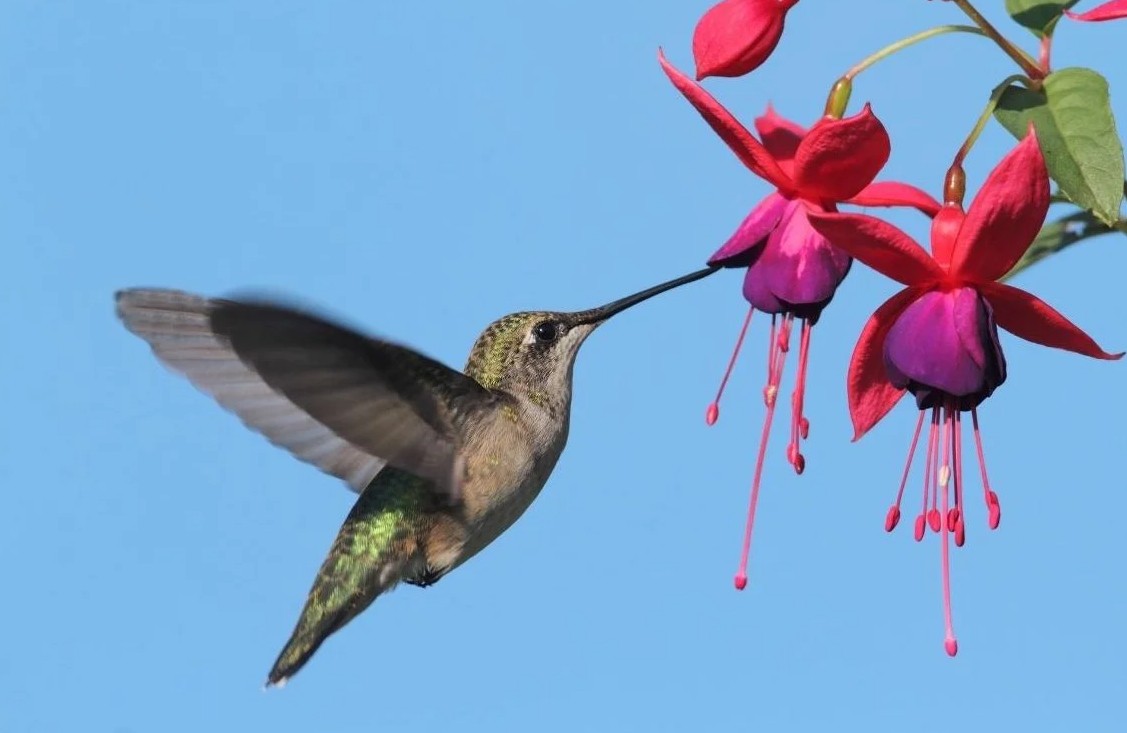
Hummingbirds are particularly attracted to brightly colored tubular flowers, especially red, orange, and pink ones.
Some of their favorite nectar plants include:
- Trumpet vine
- Bee balm
- Salvia
- Columbine
- Honeysuckle
- Fuchsia
- Cardinal flower
- Hibiscus
These flowers are perfectly shaped for hummingbird feeding. Their long, slender bills and specialized tongues allow them to reach deep into the flower where nectar is stored.
How Hummingbirds Drink Nectar
Hummingbirds have a unique feeding mechanism that allows them to extract nectar quickly and efficiently.
Their long tongues are forked at the tip and covered with tiny grooves that trap nectar through capillary action.
A hummingbird can flick its tongue up to 20 times per second while feeding.
This rapid motion allows them to drink large amounts of nectar in just a few seconds before moving on to the next flower.
Insects: A Crucial Protein Source
While nectar provides energy, it lacks the protein and nutrients hummingbirds need for growth and reproduction.
To make up for this, hummingbirds regularly eat small insects.
Common Insects Hummingbirds Eat
Some of the insects hummingbirds consume include:
- Fruit flies
- Gnats
- Mosquitoes
- Aphids
- Small beetles
- Leafhoppers
- Flying ants
These insects provide protein, amino acids, and essential nutrients that nectar cannot supply.
Young hummingbirds especially depend on insect protein to grow strong and healthy.
Do Hummingbirds Eat Spiders?
Yes, hummingbirds often eat tiny spiders as part of their diet.
Spiders provide valuable protein and fats, making them a nutritious meal.
Hummingbirds sometimes pluck spiders directly from their webs or capture them while flying.
Interestingly, hummingbirds also use spider silk to build their nests. The silk helps hold the nest together while allowing it to stretch as chicks grow.
Tree Sap: An Unexpected Food Source
Another surprising item in the hummingbird diet is tree sap.
Hummingbirds sometimes feed on sap from holes drilled by woodpeckers. These sap wells attract insects as well, giving hummingbirds an opportunity to eat both sap and bugs at the same time.
Sap contains sugars similar to nectar, making it a useful alternative food source when flowers are scarce.
Pollen and Plant Nutrients
While feeding on nectar, hummingbirds often collect pollen on their heads and bills.
Some pollen may be accidentally consumed during feeding.
Although pollen is not a primary food source, it can provide small amounts of protein and nutrients.
This feeding behavior also makes hummingbirds excellent pollinators, helping plants reproduce by transferring pollen between flowers.
Sugar Water from Hummingbird Feeders
Many bird lovers attract hummingbirds by placing feeders filled with sugar water in their gardens.
A typical homemade hummingbird nectar recipe is:
- 1 part white sugar
- 4 parts water
The mixture should be boiled briefly and cooled before being placed in a feeder.
Important tips:
- Never use honey
- Avoid artificial sweeteners
- Do not add red dye
Clean feeders regularly to prevent mold and bacteria.
Backyard feeders can be especially helpful during migration seasons when hummingbirds need extra energy.
How Hummingbirds Catch Insects
Hummingbirds are skilled aerial hunters.
They use a technique called hawking, where they catch insects in mid-air while flying.
Their excellent eyesight helps them spot tiny insects quickly.
Sometimes hummingbirds will also pick insects off leaves, branches, or spider webs.
This flexible hunting strategy allows them to find protein even when nectar is plentiful.
Feeding Habits Throughout the Day
Hummingbirds typically start feeding shortly after sunrise.
They spend most of the daylight hours moving between flowers and hunting insects.
Their feeding schedule often includes:
Morning
- Heavy feeding to restore energy after the night
Midday
- Frequent nectar visits and insect hunting
Afternoon
- Continued feeding to prepare for nighttime torpor
Evening
- Final feeding before sunset
This constant cycle ensures they maintain enough energy to survive.
Seasonal Changes in the Hummingbird Diet
The hummingbird diet changes slightly depending on the season.
Spring
During spring, hummingbirds rely heavily on early-blooming flowers and insects.
This is also breeding season, so protein intake increases.
Summer
Summer provides the largest variety of nectar-producing flowers.
Hummingbirds consume large amounts of nectar and insects to fuel nesting and raising chicks.
Fall
In autumn, hummingbirds enter a stage called hyperphagia, where they eat more than usual to build fat reserves for migration.
Winter
Some hummingbirds migrate to warmer climates where flowers and insects remain available.
Baby Hummingbird Diet
Baby hummingbirds have very specific dietary needs.
Mother hummingbirds feed their chicks a mixture of:
- Partially digested insects
- Nectar
This protein-rich diet helps chicks grow rapidly.
A mother hummingbird may feed her chicks several times per hour, ensuring they get enough nutrients for development.
How Hummingbirds Find Food
Hummingbirds rely on excellent vision and memory.
They can remember:
- Which flowers contain nectar
- Which flowers they recently visited
- The locations of reliable food sources
They also prefer brightly colored flowers, especially red.
Because of this preference, many hummingbird feeders are designed with red parts to attract their attention.
How to Attract Hummingbirds to Your Garden
If you want to observe hummingbirds up close, you can create a hummingbird-friendly garden.
Plant Nectar-Rich Flowers
Choose flowers that produce plenty of nectar, such as:
- Bee balm
- Trumpet vine
- Salvia
- Cardinal flower
- Columbine
Planting native species works best.
Provide Hummingbird Feeders
Hang feeders in shaded areas and keep them clean.
Refill nectar every few days, especially during warm weather.
Avoid Pesticides
Pesticides can reduce insect populations, removing an important food source for hummingbirds.
Natural gardening practices are best.
Fascinating Facts About Hummingbird Feeding
Here are a few surprising facts about hummingbird eating habits:
- A hummingbird may visit 1,000 to 2,000 flowers per day.
- Their tongue moves up to 20 times per second when feeding.
- They can remember the location of dozens of food sources.
- Hummingbirds sometimes chase other birds away from good feeding spots.
- Their diet balances energy-rich nectar with protein-rich insects.
These adaptations make hummingbirds one of nature’s most efficient feeders.
Why Hummingbirds Are Important for Ecosystems
Hummingbirds play a vital ecological role.
As they feed on nectar, they transfer pollen between flowers, helping plants reproduce.
Many plant species rely heavily on hummingbirds for pollination.
Without hummingbirds, some plants would struggle to survive and spread.
This mutual relationship benefits both birds and plants.
Final Thoughts
So, what do hummingbirds eat?
While nectar is their primary energy source, hummingbirds also depend on insects, spiders, tree sap, and small amounts of pollen to maintain a balanced diet.
Their feeding habits are perfectly adapted to their high-energy lifestyle. By combining sugar-rich nectar with protein-packed insects, hummingbirds get everything they need to power their incredible flying abilities.
Whether visiting colorful flowers in the wild or sipping from backyard feeders, hummingbirds continue to amaze us with their agility, intelligence, and remarkable feeding strategies.
If you want to attract these fascinating birds to your garden, providing nectar-rich flowers and clean feeders can make your yard a welcome stop for these tiny aerial acrobats.