Owls in Michigan: A Complete Guide to the State’s Mysterious Night Hunters

Owls have long captured the human imagination with their silent flight, piercing eyes, and haunting calls echoing through the night. In Michigan, a state rich with forests, wetlands, and open countryside, these elusive birds thrive in diverse habitats. Whether you’re a seasoned birder or just curious about the wildlife in your backyard, learning about owls in Michigan opens the door to a fascinating world of nocturnal predators.
From the iconic hoot of the Great Horned Owl to the ghostly presence of the Snowy Owl during winter, Michigan is home to several owl species—each with unique behaviors, habitats, and stories to tell.
In this comprehensive guide, we’ll explore the types of owls found in Michigan, where to find them, what they eat, and how you can safely observe them in the wild.
Why Michigan Is a Haven for Owls
Michigan’s varied ecosystems make it an ideal environment for owls. The state includes:
- Dense deciduous and coniferous forests
- Vast wetlands and marshes
- Open farmlands and grasslands
- Shorelines along the Great Lakes
These habitats support a rich prey base—small mammals, birds, insects, and fish—making it easy for owls to thrive.
Additionally, Michigan’s seasonal changes attract both year-round residents and migratory owl species, especially during the winter months when northern owls move south in search of food.
Common Owls in Michigan
Let’s take a closer look at the most common species of owls in Michigan.
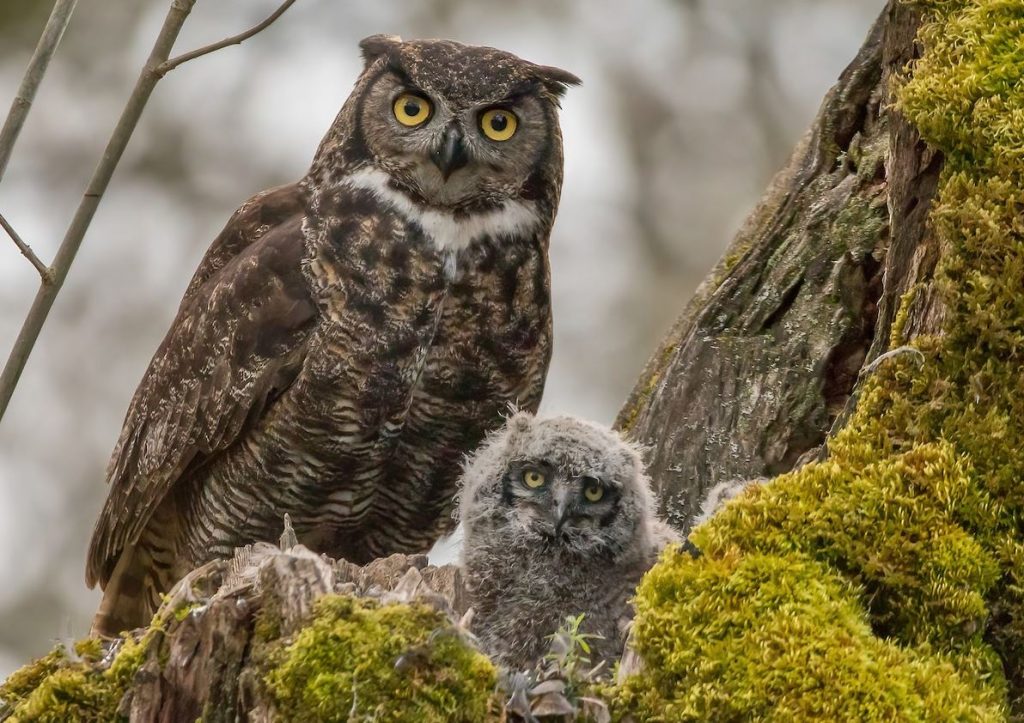
1. Great Horned Owl (Bubo virginianus)
The Great Horned Owl is the most widespread and recognizable owl in Michigan.
Key Features:
- Large size with prominent ear tufts
- Yellow eyes and mottled brown plumage
- Deep, resonant hooting call
Habitat:
Found in forests, woodlands, suburban parks, and even urban areas.
Behavior:
- Highly adaptable and aggressive predator
- Hunts rabbits, squirrels, birds, and even skunks
- Often uses abandoned nests from other birds
Fun Fact:
The Great Horned Owl is sometimes called the “Tiger of the Sky” because of its fierce hunting abilities.
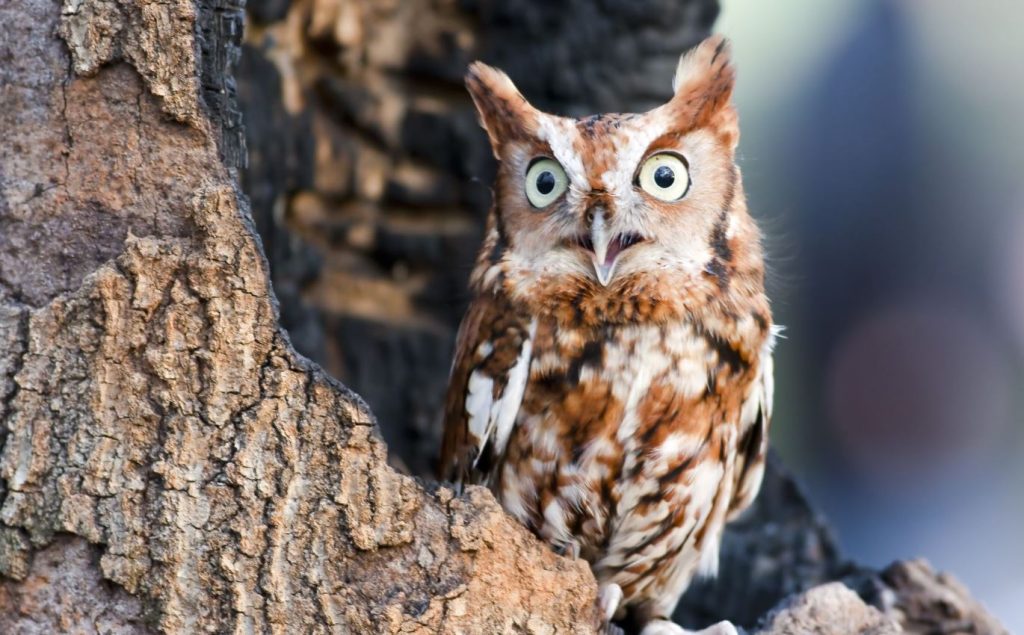
2. Eastern Screech-Owl (Megascops asio)
Despite its name, the Eastern Screech-Owl doesn’t actually screech often—it produces soft trills and whinnies.
Key Features:
- Small size (about 6–10 inches tall)
- Gray or reddish-brown color morphs
- Camouflaged appearance
Habitat:
Wooded areas, suburban neighborhoods, and parks.
Behavior:
- Nocturnal and highly secretive
- Nests in tree cavities or nest boxes
- Feeds on insects, small mammals, and birds
Tip for Spotting:
Listen for their gentle trilling calls on quiet nights.
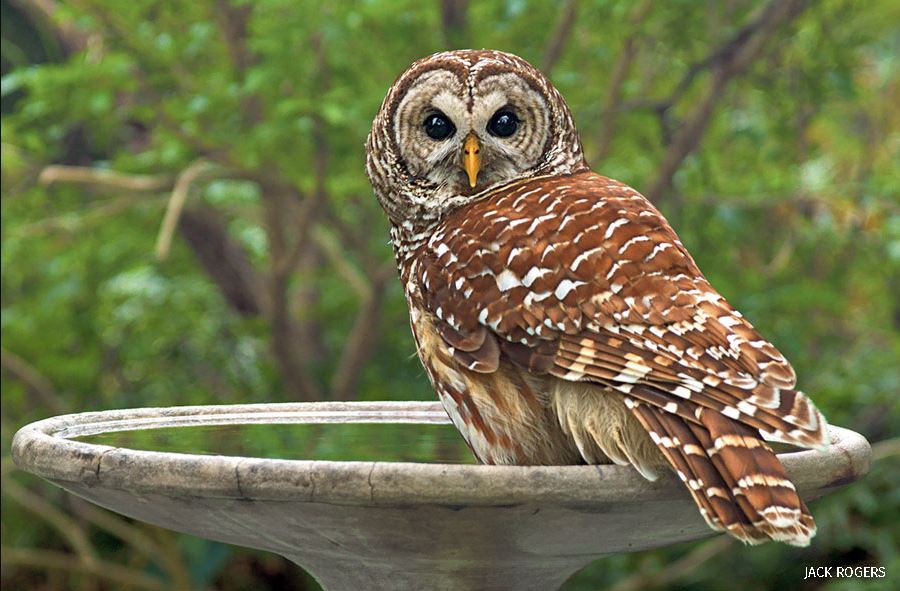
3. Barred Owl (Strix varia)
Known for its famous call that sounds like “Who cooks for you? Who cooks for you all?”
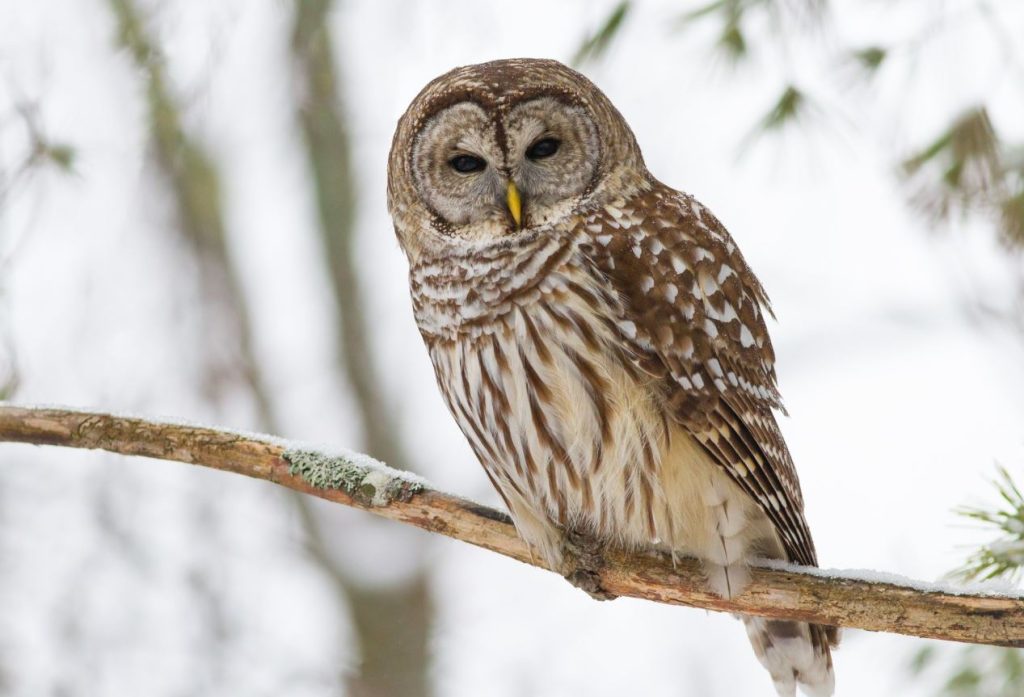
Key Features:
- Medium to large size
- Round head with no ear tufts
- Dark eyes and barred plumage
Habitat:
Prefers dense forests near water such as swamps and riverbanks.
Behavior:
- Often active during the day as well as night
- Feeds on amphibians, small mammals, and birds
- Known for curious and bold behavior
4. Snowy Owl (Bubo scandiacus)
A winter visitor that brings a touch of the Arctic to Michigan.
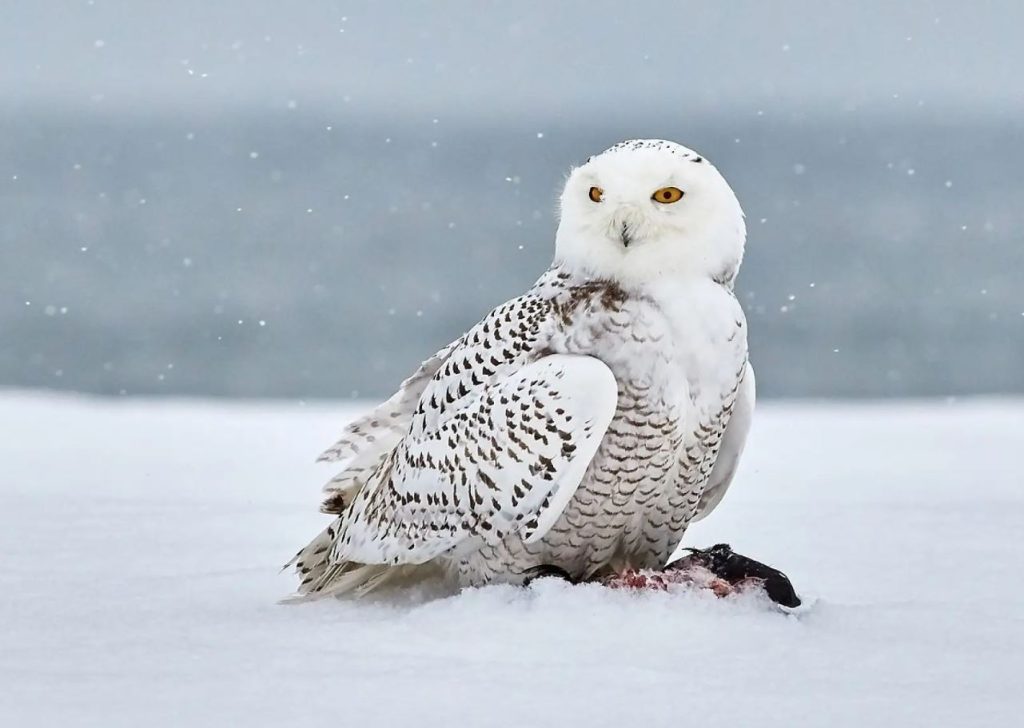
Key Features:
- Large, white owl with black markings
- Bright yellow eyes
- Females and juveniles have more spotting
Habitat:
Open areas like fields, airports, and shorelines.
Behavior:
- Diurnal (active during the day)
- Hunts rodents and waterfowl
- Migrates south during harsh winters
Best Time to See:
Late fall through early spring.
5. Northern Saw-whet Owl (Aegolius acadicus)
One of the smallest owls in Michigan, yet surprisingly widespread.
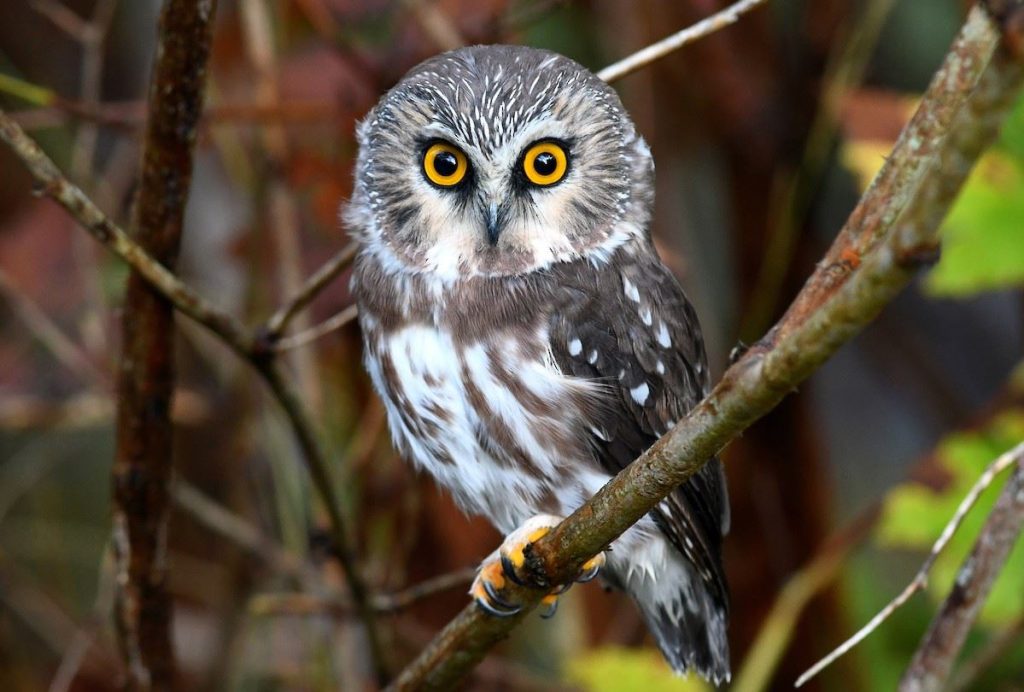
Key Features:
- Tiny size (about 7–8 inches tall)
- Large head and bright yellow eyes
- Brown with white streaks
Habitat:
Dense forests, especially coniferous woods.
Behavior:
- Extremely secretive and nocturnal
- Feeds primarily on mice
- Often migrates through Michigan
6. Long-eared Owl (Asio otus)
A slender owl with long ear tufts and a preference for quiet forests.
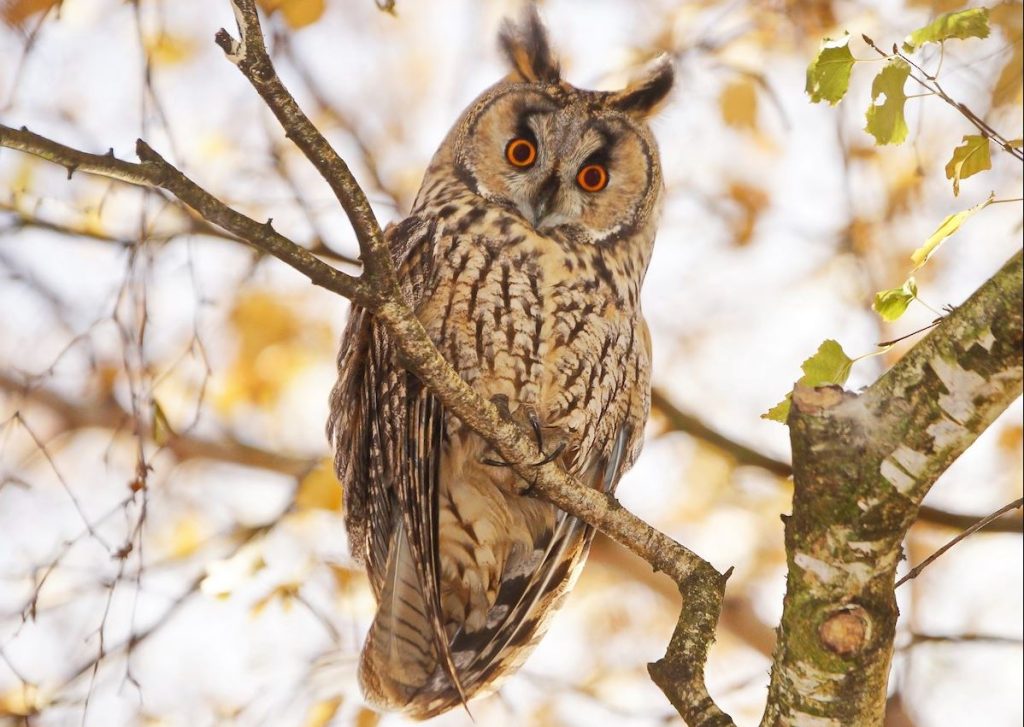
Key Features:
- Tall ear tufts
- Slim body and mottled brown plumage
- Orange eyes
Habitat:
Forested areas near open land for hunting.
Behavior:
- Roosts in groups during winter
- Hunts at night, feeding on small mammals
7. Short-eared Owl (Asio flammeus)
Unlike most owls, the Short-eared Owl is often active during daylight hours.
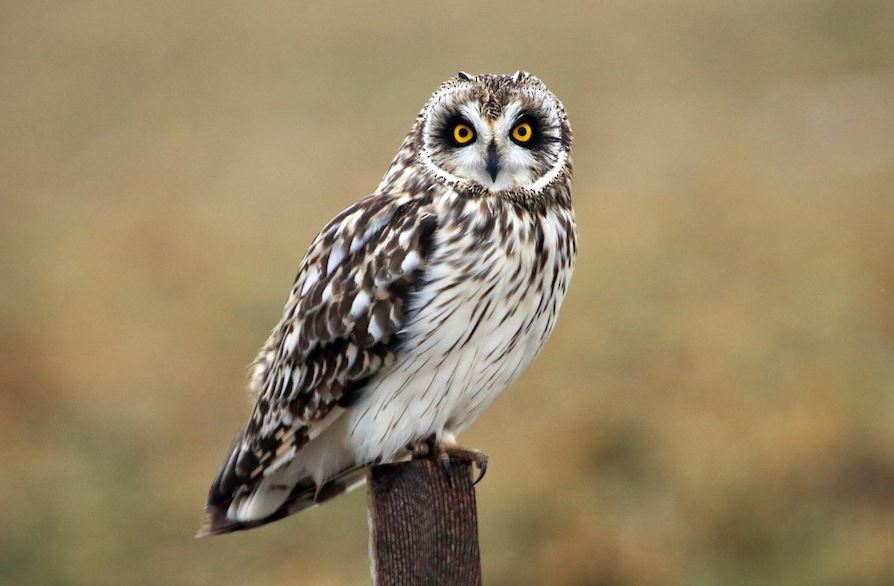
Key Features:
- Short ear tufts (often not visible)
- Pale face with dark eye patches
- Moth-like flight pattern
Habitat:
Open grasslands, marshes, and fields.
Behavior:
- Hunts by flying low over fields
- Feeds mainly on voles and rodents
- Often seen at dawn and dusk
Rare and Occasional Owls in Michigan
While less common, these owls occasionally appear in the state:
- Boreal Owl
- Northern Hawk Owl
- Barn Owl (very rare in Michigan)
These sightings are exciting for birders and often occur during irruption years when food is scarce in northern regions.
What Do Owls in Michigan Eat?
Owls are carnivorous and play a vital role in controlling rodent populations.
Common Prey Includes:
- Mice and voles
- Rabbits and squirrels
- Small birds
- Frogs and insects
- Fish (for some species)
Owls swallow prey whole and later regurgitate indigestible parts (bones, fur, feathers) as pellets—an important tool for scientists studying their diet.
Where to Find Owls in Michigan
If you want to spot owls in Michigan, here are some top locations and habitat types:
Forests
- Ideal for Barred Owls, Great Horned Owls, and Saw-whet Owls
Wetlands & Swamps
- Perfect for Barred Owls and Short-eared Owls
Farmlands & Grasslands
- Look for Short-eared Owls and Snowy Owls
Urban & Suburban Areas
- Eastern Screech-Owls and Great Horned Owls adapt well to human environments
Best Time to See Owls in Michigan
- Winter: Best for Snowy Owls and northern species
- Spring: Breeding season—owls are more vocal
- Summer: Active feeding of young
- Fall: Migration season for some species
Time of Day:
- Most owls are active at night
- Some species (like Snowy and Short-eared Owls) are active during the day
How to Identify Owls by Sound
Since owls are often hidden, their calls are the best way to detect them.
Examples:
- Great Horned Owl: Deep “hoo-hoo-hoo”
- Barred Owl: “Who cooks for you?”
- Eastern Screech-Owl: Soft trills and whinnies
Learning these calls can dramatically increase your chances of finding owls.
Tips for Spotting Owls in Michigan
- Go Out at Dusk or Dawn
These are peak activity times. - Listen Carefully
Owl calls often reveal their location before you see them. - Look for Movement
Watch for silent gliding or perched silhouettes. - Use a Flashlight Responsibly
Avoid disturbing the owl—use dim light or red filters. - Check Roosting Sites
Dense trees and evergreens are common hiding spots.
Attracting Owls to Your Backyard
While you can’t guarantee owl visits, you can make your yard more inviting:
- Install owl nest boxes
- Preserve large trees
- Avoid pesticides (protect prey populations)
- Keep your yard quiet and natural
The Role of Owls in Michigan’s Ecosystem
Owls are essential for maintaining ecological balance. By controlling rodent populations, they help:
- Protect crops
- Reduce disease spread
- Maintain healthy ecosystems
They are also indicators of environmental health—if owls are thriving, the ecosystem is likely in good shape.
Conservation and Threats
Despite their adaptability, owls face several challenges:
- Habitat loss due to urban development
- Road collisions
- Pesticide exposure
- Climate change affecting prey availability
Conservation efforts focus on preserving habitats and educating the public about the importance of these birds.
Owl Watching Ethics
When observing owls, always prioritize their well-being:
- Keep a safe distance
- Avoid loud noises
- Never disturb nests
- Do not use recorded calls excessively
Respecting wildlife ensures future generations can enjoy these incredible birds.
FAQs About Owls in Michigan
What is the most common owl in Michigan?
The Great Horned Owl is the most widespread and commonly seen owl in the state.
Are owls active during the day?
Most are nocturnal, but species like Snowy Owls and Short-eared Owls can be active during daylight.
Where can I see Snowy Owls in Michigan?
Look in open areas such as fields, shorelines, and airports during winter.
Do owls stay in Michigan year-round?
Some species are permanent residents, while others migrate seasonally.
Is it legal to keep an owl as a pet?
No, it is illegal to keep native owls as pets in the United States.
Final Thoughts
Exploring owls in Michigan is a rewarding experience that connects you with nature in a deeply meaningful way. Whether you’re listening to the haunting call of a Barred Owl deep in a forest or spotting a Snowy Owl perched on a snowy field, these birds offer unforgettable encounters.
By understanding their habits, habitats, and roles in the ecosystem, you not only become a better observer but also a steward of the natural world.
So next time the sun sets and the woods grow quiet, step outside and listen—you might just hear the whisper of wings overhead.