Hawks in Ohio: Where to Find Them and How to Identify Each Species

Ohio is one of the best places in the American Midwest to observe birds of prey, especially hawks. From dense forests and farmland to wetlands and open grasslands, the Buckeye State offers diverse habitats that attract several species of hawks throughout the year. Whether you’re a beginner birdwatcher or an experienced birder, learning about hawks in Ohio can transform a simple walk outdoors into an exciting wildlife adventure.
In this comprehensive guide, you’ll discover the most common hawk species found in Ohio, where to find them, and how to identify each one in the wild. We’ll also share helpful birdwatching tips so you can increase your chances of spotting these impressive raptors.
Why Ohio Is a Great Place to See Hawks
Ohio sits along several major bird migration routes in North America. During spring and fall, thousands of birds of prey travel through the state while moving between breeding and wintering grounds. This migration brings a variety of hawks to Ohio, making it a prime destination for raptor watching.
Several factors make Ohio especially attractive to hawks:
- Diverse habitats such as forests, rivers, farmland, and wetlands
- Abundant prey, including rodents, snakes, small birds, and insects
- Open landscapes ideal for hunting
- Protected parks and nature reserves
Because of these conditions, birdwatchers can observe hawks year-round in Ohio.
8 Hawks in Ohio You Should Know
Ohio is home to several hawk species, though some are more common than others. Below are the most notable hawks you may encounter while exploring the state.
1. Red-tailed Hawk
One of the most recognizable hawks in Ohio is the Red-tailed Hawk. It is also among the most widespread raptors in North America.
Identification
- Large body with broad wings
- Distinct reddish-brown tail in adults
- Pale underside with a dark belly band
- Wingspan: about 4 to 5 feet
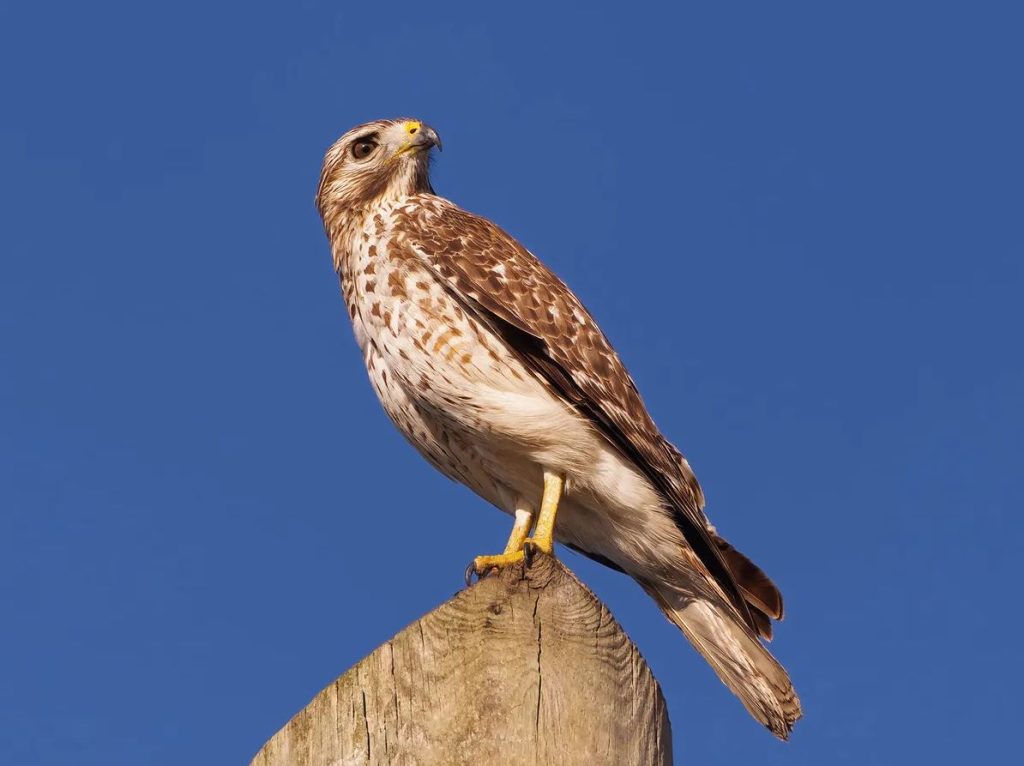
Juveniles may lack the red tail at first, but their overall bulky shape still helps with identification.
Habitat in Ohio
Red-tailed Hawks thrive in:
- Open farmland
- Meadows and grasslands
- Roadsides and utility poles
- Forest edges
They often perch high on poles or trees while scanning the ground for prey.
Where to Find Them
You can easily spot Red-tailed Hawks in many areas across Ohio, including:
- Rural highways
- State parks
- Agricultural landscapes
They are present year-round and are one of the most frequently seen hawks in the state.
Diet
These powerful hunters primarily eat:
- Mice and voles
- Rabbits
- Snakes
- Small birds
Their sharp vision allows them to detect prey from impressive distances.
2. Cooper’s Hawk
The Cooper’s Hawk is a fast and agile predator known for hunting other birds. It is increasingly common in suburban areas across Ohio.
Identification
Key features include:
- Medium size
- Long rounded tail with dark bands
- Blue-gray back
- Reddish bars on the chest
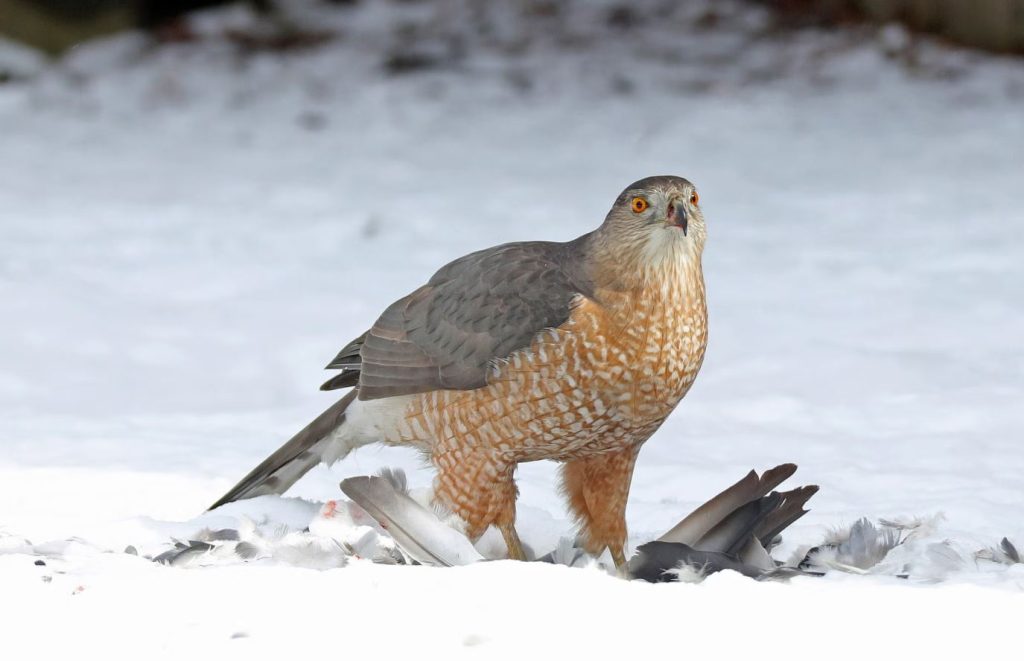
Compared to other hawks, Cooper’s Hawks have short wings and long tails, perfect for maneuvering through trees.
Habitat
They prefer:
- Woodlands
- Forest edges
- Suburban neighborhoods with mature trees
Many backyard birdwatchers in Ohio see Cooper’s Hawks visiting feeders in search of smaller birds.
Where to Find Them
Look for them in:
- City parks
- Residential neighborhoods
- Forested areas
They are year-round residents throughout most of Ohio.
Diet
Their diet mainly consists of:
- Songbirds
- Doves
- Small mammals
They often chase prey through trees at high speed.
3. Sharp-shinned Hawk
The Sharp-shinned Hawk closely resembles the Cooper’s Hawk but is noticeably smaller.
Identification
Distinguishing features include:
- Small size
- Short rounded wings
- Square-tipped tail
- Blue-gray upperparts
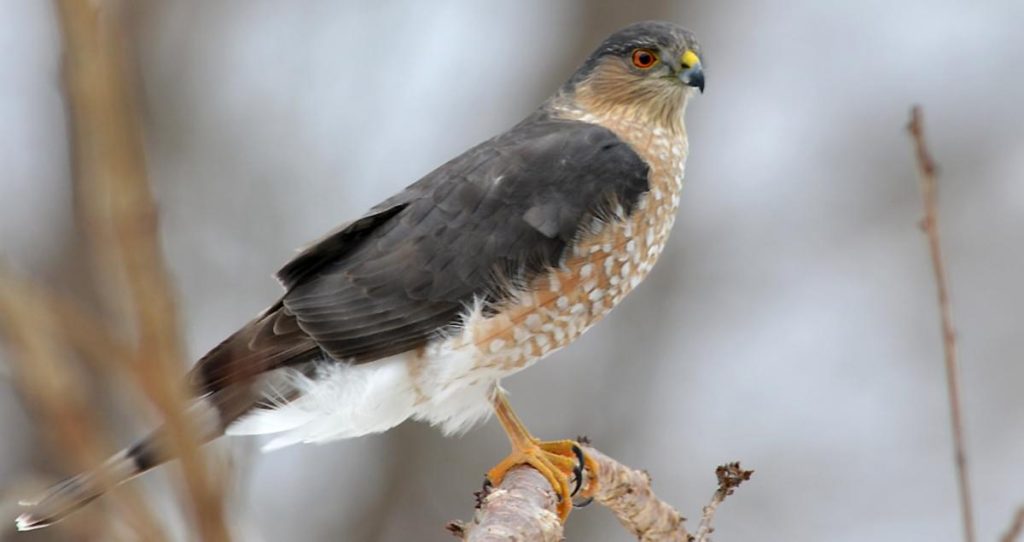
Because they look so similar to Cooper’s Hawks, birdwatchers often rely on size and head shape to tell them apart.
Habitat
Sharp-shinned Hawks prefer:
- Dense forests
- Woodland edges
- Conifer stands
Where to Find Them in Ohio
These hawks are most commonly seen during migration seasons in spring and fall.
Top locations include:
- Forested parks
- Nature preserves
- Migration watch sites
Diet
They mainly hunt:
- Small birds
- Sparrows
- Finches
Their stealth and speed make them effective forest hunters.
4. Broad-winged Hawk
Broad-winged Hawks are famous for their massive migration flocks known as kettles.
Identification
Key characteristics include:
- Compact body
- Short tail
- Broad wings
- Dark bars across the tail
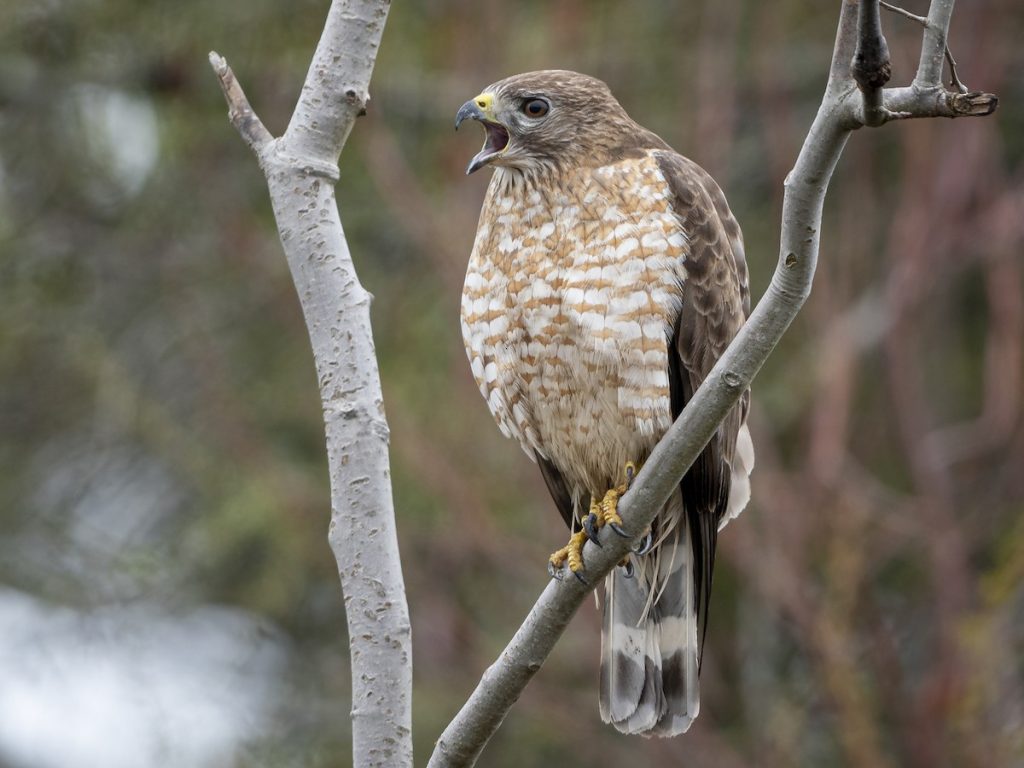
They produce a high-pitched whistling call often heard in forests.
Habitat
In Ohio, Broad-winged Hawks prefer:
- Deciduous forests
- Remote woodland areas
- River valleys
Where to Find Them
They are mainly present during summer breeding season in Ohio.
Great places to look include:
- Hocking Hills State Park
- Wayne National Forest
- Large forest preserves
During fall migration, thousands pass through the region heading south.
Diet
Broad-winged Hawks feed on:
- Frogs
- Insects
- Small mammals
- Reptiles
5. Red-shouldered Hawk
The Red-shouldered Hawk is one of the most beautiful woodland raptors in Ohio.
Identification
Look for:
- Reddish shoulders
- Bold black-and-white wing patterns
- Strongly banded tail
- Distinctive loud call
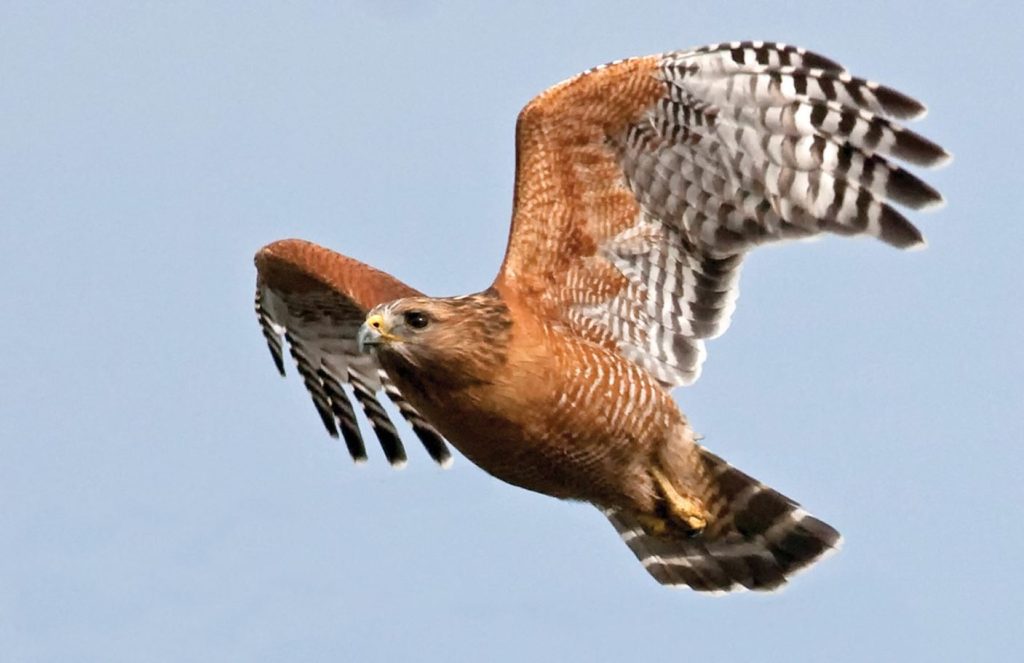
They are slightly smaller than Red-tailed Hawks but still fairly large.
Habitat
These hawks prefer wet forests and areas near water.
Common habitats include:
- Swamps
- Floodplain forests
- River corridors
Where to Find Them
Some of the best places include:
- Wetland reserves
- River valleys
- Forested parks
They are year-round residents in many parts of Ohio.
Diet
Red-shouldered Hawks often hunt:
- Frogs
- Snakes
- Small mammals
- Crayfish
Their diet reflects their preference for wet habitats.
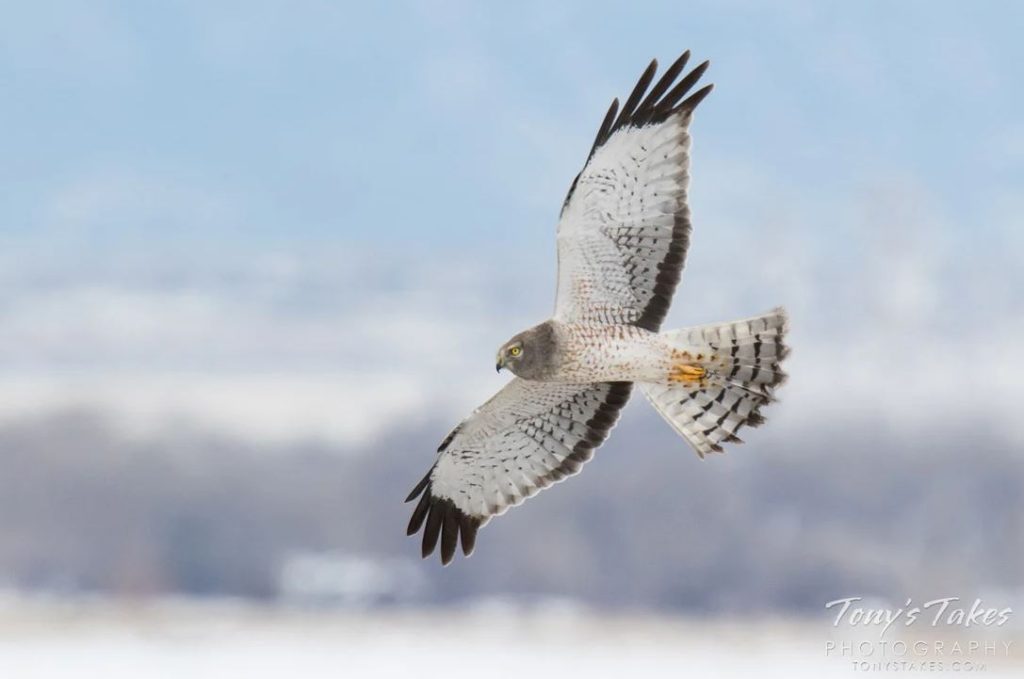
6. Northern Harrier
The Northern Harrier is a unique hawk with an owl-like face and graceful flight.
Identification
Key traits include:
- Long wings and tail
- White rump patch
- Low gliding flight over fields
- Males appear gray while females are brown
Habitat
They favor open landscapes such as:
- Grasslands
- Marshes
- Agricultural fields
Where to Find Them in Ohio
Northern Harriers are easier to see during winter months.
Look for them in:
- Wildlife refuges
- Large open fields
- Wetland areas
Diet
They hunt small animals like:
- Voles
- Mice
- Small birds
Their excellent hearing helps them locate prey hidden in grass.
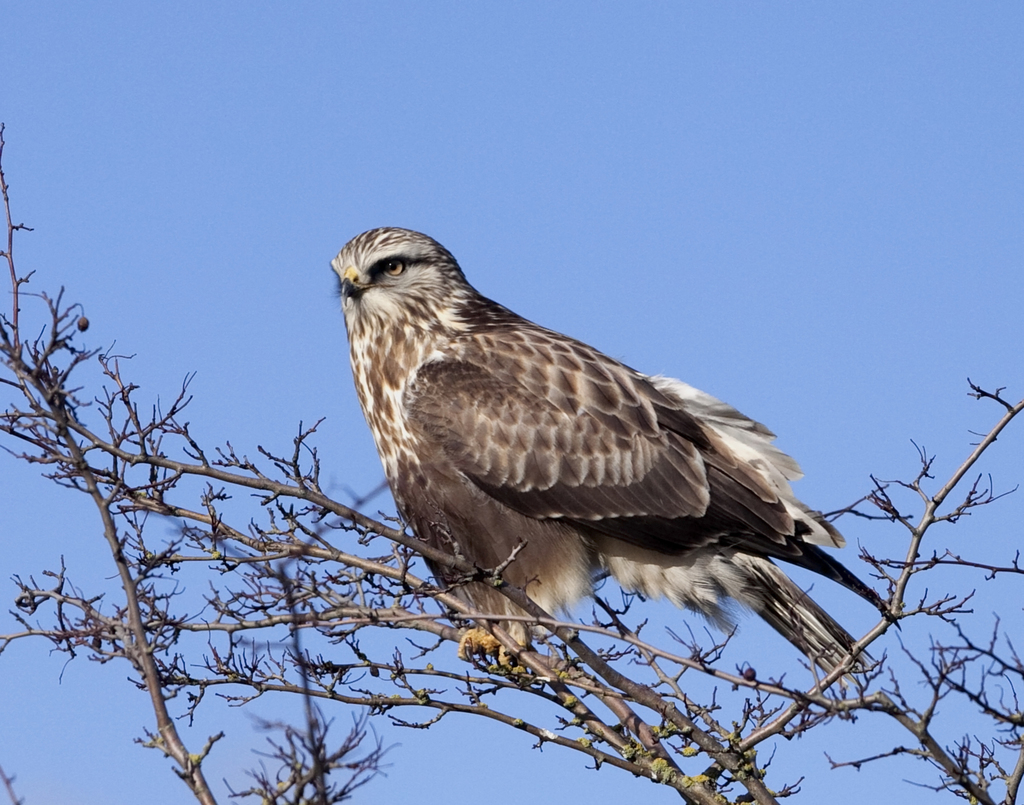
7. Rough-legged Hawk
This Arctic breeder visits Ohio mainly during winter.
Identification
Characteristics include:
- Feathered legs
- Dark belly patch
- Long wings
- Often hovers while hunting
Habitat
They prefer wide open landscapes similar to their tundra breeding grounds.
Typical habitats include:
- Farmland
- Grasslands
- Marshes
Where to Find Them
Look for Rough-legged Hawks in northern Ohio during winter.
They often perch on fence posts or hover above fields.
Diet
Their primary prey includes:
- Voles
- Small rodents
Winter conditions in Ohio provide suitable hunting opportunities.
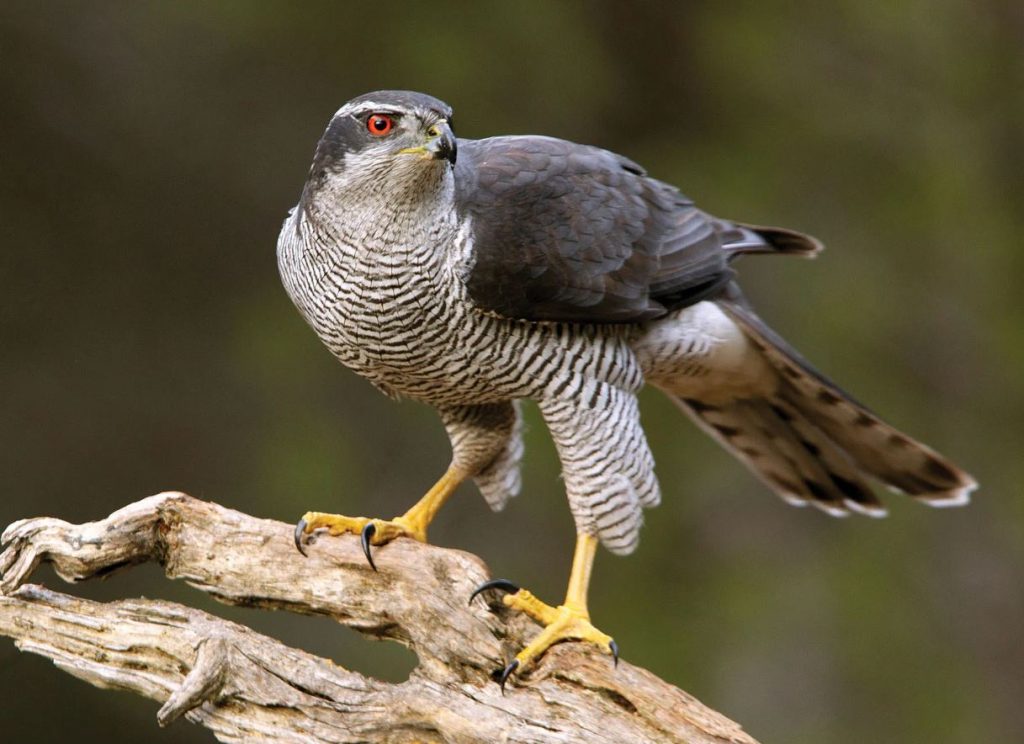
8. Northern Goshawk (Rare Visitor)
Although uncommon, the Northern Goshawk occasionally appears in Ohio during winter.
Identification
Features include:
- Large powerful body
- Gray upperparts
- Bold white eyebrow stripe
- Long tail with dark bands
Habitat
They prefer large mature forests.
Where to Find Them
Sightings are rare but may occur in:
- Remote forests
- Northern Ohio woodlands
Because they are secretive birds, spotting one is considered a special event for birdwatchers.
Best Places to See Hawks in Ohio
If you want to increase your chances of spotting hawks, consider visiting these excellent birding locations:
Magee Marsh Wildlife Area
One of the most famous birding sites in North America, especially during migration.
Ottawa National Wildlife Refuge
A hotspot for birds of prey and waterfowl along Lake Erie.
Hocking Hills State Park
Offers forest habitats perfect for species like Broad-winged and Red-shouldered Hawks.
Killdeer Plains Wildlife Area
Large grasslands that attract Northern Harriers and Rough-legged Hawks.
Wayne National Forest
Southern Ohio forests provide ideal habitat for woodland hawks.
How to Identify Hawks in Ohio
Identifying hawks can be challenging, especially for beginners. Here are a few tips that can help.
Look at the Shape
Each hawk species has a distinctive silhouette.
For example:
- Red-tailed Hawks have broad wings and short tails.
- Cooper’s Hawks have long tails and shorter wings.
- Northern Harriers glide low with long wings.
Learning these shapes helps with quick identification.
Observe Flight Behavior
Hawks often reveal their identity through flight style.
Examples include:
- Soaring circles – typical of Red-tailed Hawks
- Fast darting flight – Cooper’s Hawks
- Low gliding over fields – Northern Harriers
Watching how a hawk moves can be just as important as its appearance.
Pay Attention to Habitat
Where you see a hawk often gives clues about the species.
- Forest hawks: Broad-winged, Cooper’s
- Field hunters: Northern Harriers
- Wetland areas: Red-shouldered Hawks
Matching habitat with field marks makes identification easier.
Best Time of Year to See Hawks in Ohio
Hawks can be seen year-round, but certain seasons are better for spotting specific species.
Spring Migration (March–May)
Large numbers of hawks pass through Ohio heading north.
Summer (June–August)
Breeding hawks such as Broad-winged and Red-shouldered Hawks are active.
Fall Migration (September–November)
Another excellent time for raptor watching as birds travel south.
Winter (December–February)
Winter visitors like Rough-legged Hawks and Northern Harriers are easier to spot.
Tips for Hawk Watching in Ohio
If you want to observe hawks successfully, try these birdwatching tips:
Bring Binoculars
A good pair of binoculars helps you see important details from far away.
Visit Open Areas
Fields, marshes, and hilltops provide better views of soaring hawks.
Watch the Sky
Many hawks spend long periods gliding or soaring overhead.
Be Patient
Raptor watching often requires time and careful observation.
Join Local Birding Groups
Local birding communities frequently share recent sightings.
Why Hawks Are Important to Ohio’s Ecosystem
Hawks play a vital role in maintaining healthy ecosystems. As top predators, they help control populations of rodents and other small animals.
Without hawks, prey species could multiply rapidly and disrupt ecological balance. Their presence is also a sign of a healthy environment with abundant wildlife.
Conservation efforts across Ohio continue to protect habitats that support these magnificent birds.
Final Thoughts
From farmland and wetlands to deep forests, hawks in Ohio are a fascinating part of the state’s wildlife. Whether it’s the powerful Red-tailed Hawk perched along a roadside or the graceful Northern Harrier gliding over marshes, each species offers a unique glimpse into the world of raptors.
By learning where to find them and how to identify each species, birdwatchers can greatly enhance their outdoor experiences. The next time you explore Ohio’s parks, fields, or forests, keep your eyes on the sky—you might just spot one of these incredible hawks soaring overhead.