How Often Does Chicken Lay Eggs in a Week? What Every Backyard Chicken Owner Should Know

Raising backyard chickens has become increasingly popular across the United States. Whether you keep hens for fresh eggs, sustainability, or simply for the joy of having feathered companions, one question inevitably comes up:
How often does chicken lay eggs in a week?
If you’re new to backyard chicken keeping, you might expect a hen to lay an egg every single day. While that sometimes happens, the truth is a bit more nuanced. Egg production depends on several factors, including the hen’s breed, age, nutrition, environment, and even the time of year.
In this complete guide, you’ll learn:
- How often chickens lay eggs each week
- Why some hens lay more eggs than others
- The role of breed, age, and seasons in egg production
- Signs your hens are laying regularly
- Practical tips to maximize egg production
By the end of this article, you’ll have a clear understanding of what to expect from your flock and how to help them stay productive.
How Often Does Chicken Lay Eggs in a Week?
On average, a healthy hen lays between 4 and 7 eggs per week.
Most productive hens lay about one egg every 24–26 hours, which means they usually produce 5 to 6 eggs per week under ideal conditions.
However, chickens do not lay eggs every day indefinitely. Their egg-laying cycle gradually shifts later each day. Eventually, they skip a day to reset the cycle.
Typical Weekly Egg Production
Here’s a general guideline:
| Type of Hen | Eggs Per Week |
|---|---|
| High-production breeds | 5–6 eggs |
| Average backyard hens | 3–5 eggs |
| Older hens | 2–4 eggs |
| Heritage or ornamental breeds | 1–3 eggs |
So if you have four good laying hens, you might expect about 18–24 eggs per week, depending on their health and breed.
Understanding the Chicken Egg-Laying Cycle
To understand why chickens don’t always lay daily, it helps to look at the biological egg production cycle.
A hen’s body takes approximately 24 to 26 hours to form a single egg.
The process includes several stages:
- Ovulation – The hen releases a yolk from her ovary.
- Albumen formation – Egg white forms around the yolk.
- Shell membrane development
- Shell formation – Calcium deposits create the eggshell.
The shell formation stage alone can take about 20 hours.
Because the cycle is slightly longer than a day, each egg tends to be laid a little later than the previous one. Eventually, the hen skips a day before restarting the cycle.
Egg Production by Popular Chicken Breeds
Not all chickens lay eggs at the same rate. Some breeds are specifically developed for high egg production, while others are kept mainly for meat or ornamental purposes.
Here are some common backyard breeds and their typical egg production.
High Egg-Producing Breeds
These chickens are known for excellent productivity.
Leghorn
- 5–6 eggs per week
- Up to 300 eggs per year
Rhode Island Red
- 5 eggs per week
- Around 250–300 eggs annually
Australorp
- 5–6 eggs weekly
- Famous for record-breaking egg production
Golden Comet
- 5–6 eggs weekly
- Excellent hybrid layer
Moderate Egg-Laying Breeds
These chickens still produce plenty of eggs but slightly fewer.
Plymouth Rock
- 4–5 eggs per week
Sussex
- 4–5 eggs per week
Wyandotte
- 3–4 eggs weekly
Low Egg-Producing Breeds
These breeds are usually raised for appearance or personality.
Silkie
- 2–3 eggs weekly
Polish
- 2–3 eggs weekly
Brahma
- 3 eggs per week
Choosing the right breed is one of the biggest factors influencing how many eggs your flock produces.
How Age Affects Egg Production
Age plays a major role in how often chickens lay eggs.
1. Pullets (Young Hens)
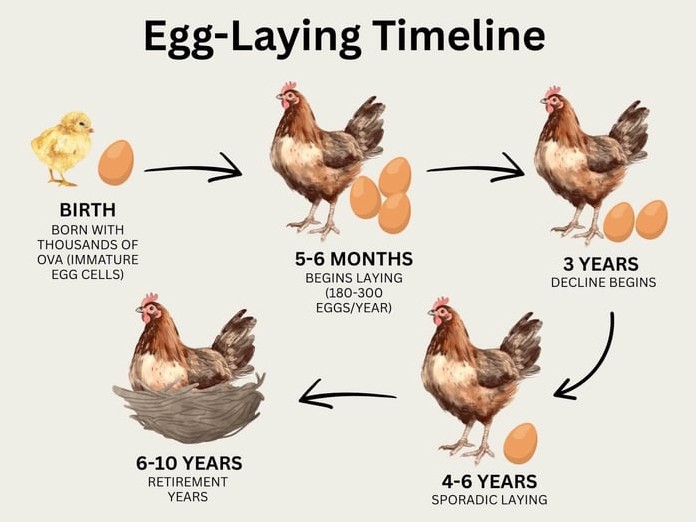
Pullets usually begin laying eggs at 18 to 24 weeks old.
During their first year, egg production is at its highest.
Most hens produce 80–90% of their lifetime egg output during the first two years.
2. Prime Laying Years
The most productive stage occurs between:
6 months and 2 years old
During this period, hens often lay 5 to 6 eggs per week.
3. Older Hens
After about 2–3 years, egg production gradually decreases.
Older hens may produce:
- 2–4 eggs per week
- Larger eggs
- Less consistent laying
Even though they lay fewer eggs, many backyard keepers keep older hens as beloved pets.
Seasonal Changes in Egg Laying
If your hens suddenly stop laying eggs during winter, you’re not alone.
Seasonal daylight changes strongly affect egg production.
Why Daylight Matters
Hens need about 14–16 hours of light per day to maintain peak egg production.
During fall and winter:
- Days become shorter
- Chickens receive less natural light
- Egg production slows or stops
This is completely natural.
Winter Egg Production
Without supplemental light, many hens will lay:
- 0–3 eggs per week in winter
Some backyard keepers install coop lighting to maintain production, but others allow hens to follow their natural cycle.
Other Factors That Affect Egg Production
Many variables influence how often a chicken lays eggs.
Nutrition
Hens require a balanced diet rich in:
- Protein
- Calcium
- Vitamins
- Minerals
Most egg-laying chickens need feed containing 16–18% protein.
Calcium is especially important for strong eggshells.
Good calcium sources include:
- Crushed oyster shells
- Limestone
- Eggshell supplements
Stress
Stress can cause chickens to stop laying eggs temporarily.
Common stress factors include:
- Predator threats
- Loud noises
- Moving to a new coop
- Introducing new chickens
- Overcrowding
Molting
Molting occurs once a year when chickens shed old feathers and grow new ones.
During molting:
- Egg production usually stops
- The hen’s body focuses energy on feather regrowth
Molting typically occurs in late summer or fall.
Health Problems
Diseases or parasites can also reduce egg production.
Common issues include:
- Mites and lice
- Worms
- Respiratory infections
- Nutritional deficiencies
Regular health checks help maintain a productive flock.
Signs Your Chicken Is Laying Eggs Regularly
If you’re unsure whether your hens are laying consistently, watch for these signs.
1. Nesting Behavior
Laying hens often:
- Spend time in nesting boxes
- Rearrange bedding
- Sit quietly before laying
2. The Egg Song
Many hens make a loud celebratory call after laying an egg. Chicken keepers often call this the “egg song.”
3. Bright Red Comb and Wattles
Healthy laying hens typically have:
- Bright red combs
- Warm, full wattles
These features indicate strong reproductive health.
4. Wider Pelvic Bones
Experienced chicken keepers can gently check the space between a hen’s pelvic bones.
Hens that are laying eggs usually have wider spacing to allow egg passage.
How to Encourage Chickens to Lay More Eggs
While you can’t force a hen to lay eggs, you can create conditions that encourage consistent production.
1. Provide High-Quality Feed
Use a layer feed designed for egg-laying hens.
Supplement with:
- Fresh vegetables
- Occasional fruits
- Healthy protein sources
Avoid feeding excessive scraps, which can dilute nutrition.
2. Ensure Plenty of Fresh Water
Water is essential for egg production.
A hen’s egg contains about 65% water, so dehydration can quickly reduce laying.
3. Provide Comfortable Nesting Boxes
Chickens prefer safe, dark nesting areas.
Provide:
- 1 nesting box for every 3–4 hens
- Soft bedding such as straw or wood shavings
- Quiet, low-stress locations
4. Maintain Proper Coop Space
Overcrowding can cause stress and reduce egg production.
General recommendations:
- 4 square feet per chicken inside the coop
- 8–10 square feet per chicken in the run
5. Protect Chickens From Predators
Fear and stress from predators can stop egg laying.
Secure the coop with:
- Hardware cloth
- Locking doors
- Covered runs
How Many Eggs Can You Expect From Backyard Chickens?
The total egg output depends on flock size and breed.
Here are some common estimates.
3 Chickens
- 12–18 eggs per week
- About 600–900 eggs per year
6 Chickens
- 24–36 eggs per week
- Around 1,200–1,800 eggs annually
10 Chickens
- 40–60 eggs weekly
- Up to 3,000 eggs per year
For many families, 4–6 hens provide plenty of fresh eggs year-round.
Why Chickens Sometimes Stop Laying Eggs
Even productive hens occasionally stop laying eggs. Some common reasons include:
- Seasonal daylight changes
- Molting
- Stress
- Poor nutrition
- Illness
- Aging
If a hen suddenly stops laying for long periods, it’s a good idea to evaluate her diet, health, and environment.
Fun Facts About Chicken Egg Laying
Here are a few fascinating facts about egg production.
- Chickens are descended from the Red Junglefowl of Southeast Asia.
- A hen is born with thousands of potential egg yolks in her ovaries.
- Most hens lay eggs in the morning hours.
- Egg color depends on breed, not diet.
- Chickens can recognize over 100 individual faces.
These intelligent birds are far more complex than many people realize.
Final Thoughts
So, how often does chicken lay eggs in a week?
For most backyard hens, the answer is about 4 to 6 eggs per week, depending on breed, age, health, and seasonal conditions.
High-producing breeds may lay nearly every day, while heritage or older hens may produce fewer eggs. Factors such as nutrition, daylight, and stress also play significant roles in egg production.
With proper care, a small flock of backyard chickens can provide a steady supply of fresh, delicious eggs for your family throughout much of the year.
Understanding your hens’ natural laying patterns helps you set realistic expectations and keep your flock happy and healthy.
FAQs
How often does a chicken lay eggs in a week?
Most healthy hens lay 4 to 6 eggs per week. High-production breeds can sometimes lay nearly one egg per day under ideal conditions.
Do chickens lay eggs every day?
Some chickens lay eggs almost every day, but most hens skip a day occasionally because the egg-forming cycle takes about 24–26 hours.
What breed of chicken lays the most eggs?
Breeds known for high egg production include:
- Leghorns
- Rhode Island Reds
- Australorps
- Golden Comets
These breeds can produce 250–300 eggs per year.
Why did my chicken suddenly stop laying eggs?
Chickens may stop laying due to:
- Molting
- Winter daylight changes
- Stress
- Poor diet
- Illness
- Aging
Most hens resume laying once conditions improve.
At what age do chickens start laying eggs?
Most chickens begin laying eggs at 18–24 weeks old, though some breeds may start slightly earlier or later.
How long do chickens lay eggs?
Chickens can lay eggs for several years, but peak production usually occurs during the first two years of life.