13 Finches in Michigan Birdwatchers Love (With Photos & ID Tips)

Michigan is a fantastic destination for birdwatchers, especially if you love colorful songbirds. Among the most fascinating birds you can encounter are finches—small to medium-sized birds known for their cheerful songs, bright plumage, and energetic personalities. Whether you’re exploring forests, wetlands, or simply watching a backyard feeder, spotting finches in Michigan can be an incredibly rewarding experience.
In this guide, we’ll explore 13 finch species that birdwatchers love to see in Michigan, including common backyard visitors and a few rare guests. You’ll also learn how to identify each species, where to find them, and helpful birdwatching tips to improve your chances of seeing them.
Why Michigan Is Great for Finches
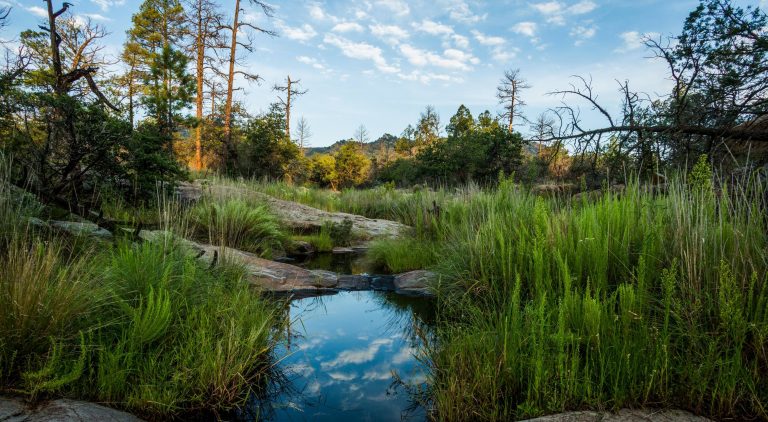
Michigan’s diverse landscapes make it ideal for finches. The state contains:
- Dense northern conifer forests
- Mixed deciduous woodlands
- Open farmland and meadows
- Numerous wetlands and lakes
These habitats provide the seeds, berries, and insects that finches depend on.
Michigan is also located along important bird migration routes, which means some finch species appear only during winter or migration seasons.
13 Finches in Michigan
Below are the 13 finch species recorded in Michigan, including both common birds and rare visitors.
1. American Goldfinch
The American Goldfinch is one of the most beloved birds in Michigan and is also the state bird.

Identification
Male (breeding season):
- Bright yellow body
- Black wings with white markings
- Black cap on the head
Female:
- Duller yellow-green
- No black cap
Winter plumage appears more brownish for both sexes.
Habitat
American Goldfinches prefer:
- Fields
- Gardens
- Parks
- Backyard feeders
Diet
They mainly eat:
- Sunflower seeds
- Nyjer (thistle) seed
- Plant seeds
Where to See Them
You can see them year-round across Michigan, especially at backyard feeders.
2. House Finch
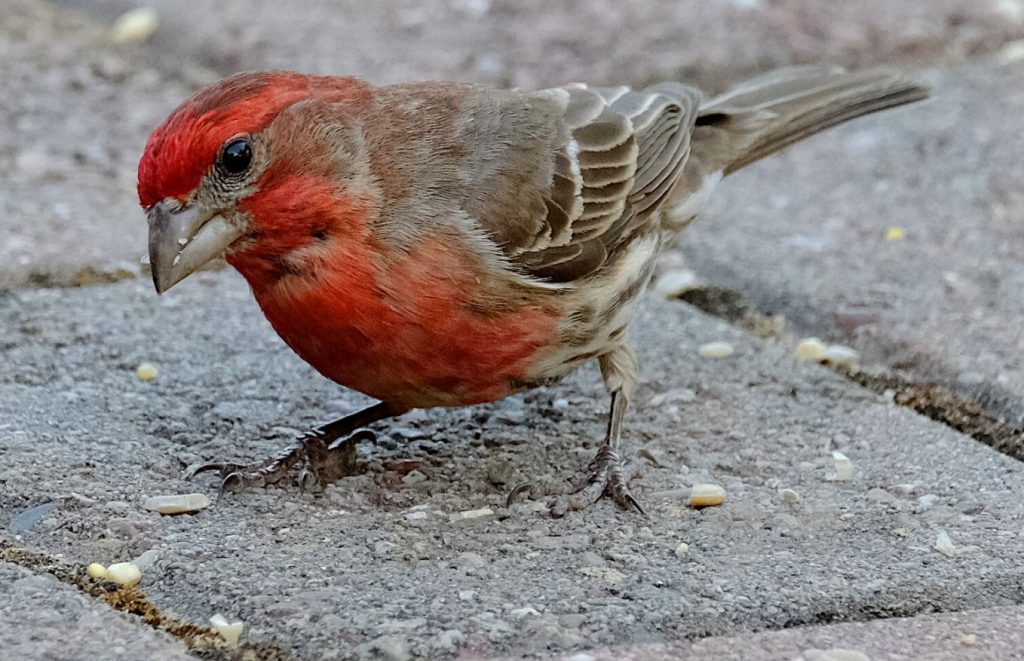
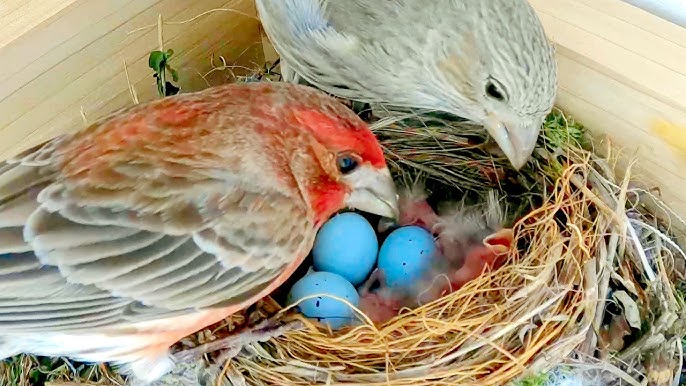
House Finches are one of the most common backyard birds in North America.
Identification
Male:
- Red head and chest
- Brown streaked body
Female:
- Brown and heavily streaked
- No red coloration
Habitat
They thrive in:
- Cities
- Suburbs
- Farms
- Residential areas
Diet
They eat:
- Seeds
- Fruits
- Buds
Where to Find Them
House Finches are common at feeders throughout Michigan.
3. Purple Finch
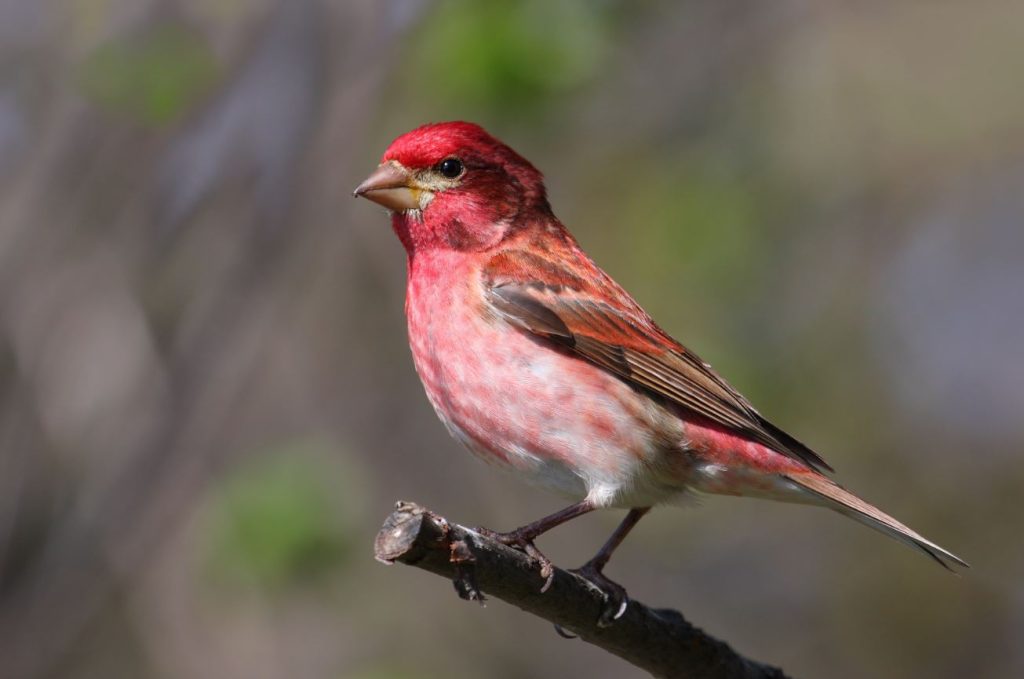
The Purple Finch is often confused with the House Finch but has richer coloration.
Identification
Male:
- Raspberry-red color across head and body
Female:
- Brown streaked body
- Bold white eyebrow stripe
Habitat
Purple Finches prefer:
- Mixed forests
- Conifer forests
- Woodland edges
Season in Michigan
They are most often seen during migration and winter.
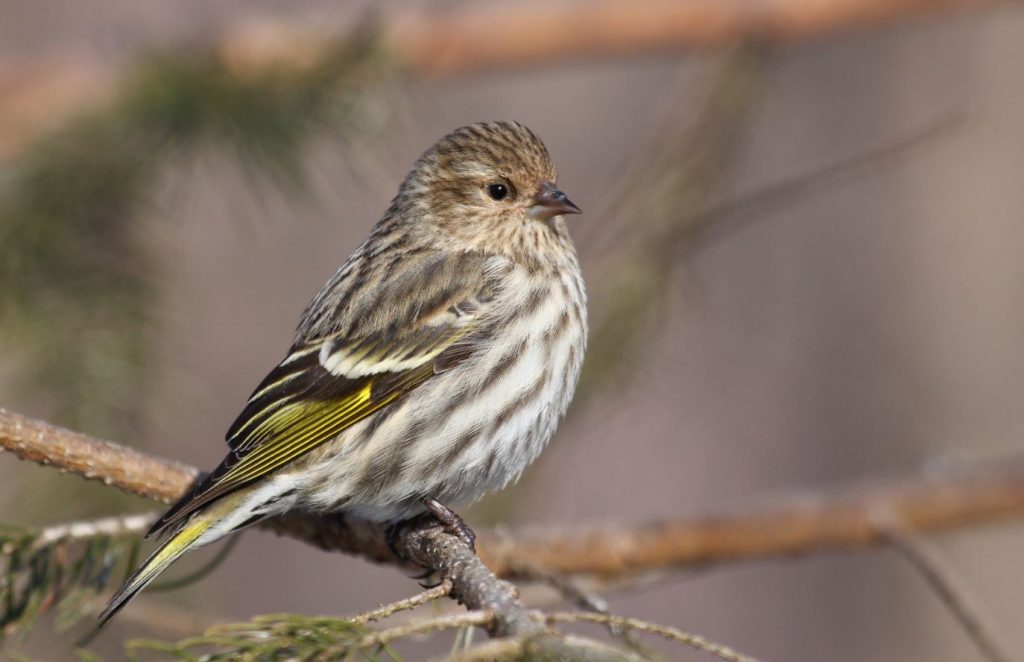
4. Pine Siskin
Pine Siskins are small finches that sometimes appear in huge flocks.
Identification
- Brown streaked body
- Yellow flashes on wings and tail
- Small pointed bill
Habitat
They prefer:
- Conifer forests
- Woodland edges
- Backyard feeders during winter
Diet
Their favorite foods include:
- Nyjer seed
- Spruce and pine seeds
Season
They appear mainly in winter and migration periods.
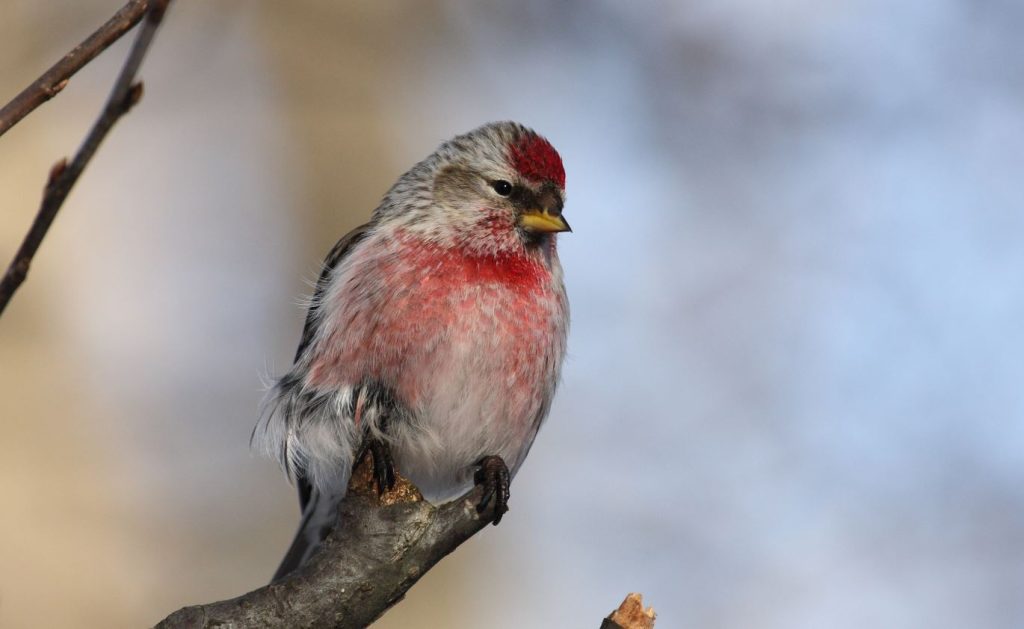
5. Common Redpoll
The Common Redpoll is a charming winter finch that visits Michigan during colder months.
Identification
- Small red patch on head
- Black chin
- Streaked body
- Pink chest on males
Habitat
Common Redpolls like:
- Birch forests
- Open woodland
- Backyard feeders
Season
Most often seen during winter irruptions.
6. Hoary Redpoll
Hoary Redpolls closely resemble Common Redpolls but are much rarer.
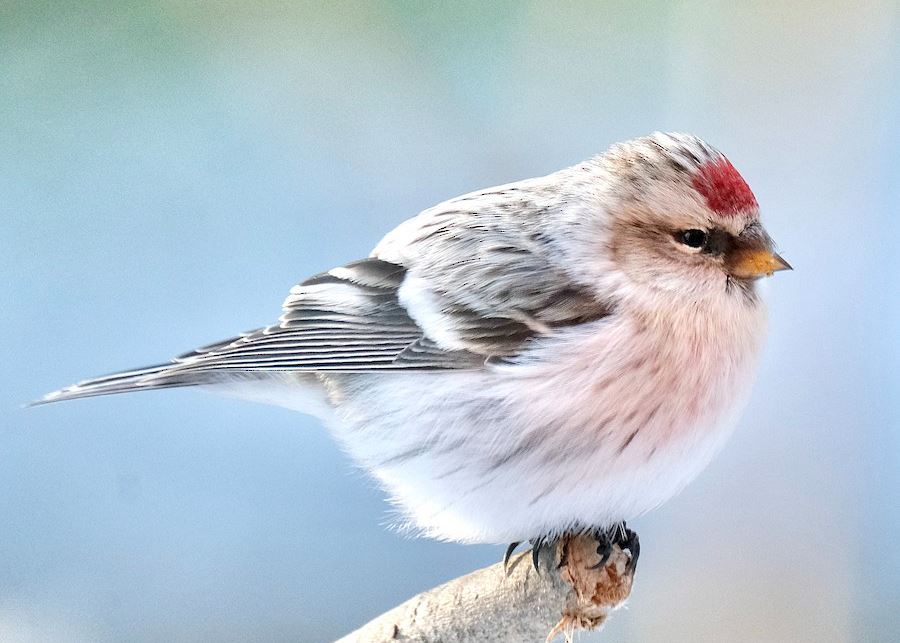
Identification
- Paler plumage
- Smaller bill
- Less streaking on body
Because they look so similar, careful observation is needed.
Habitat
They inhabit:
- Northern tundra
- Boreal forests
Season
Occasionally appear in Michigan winters.
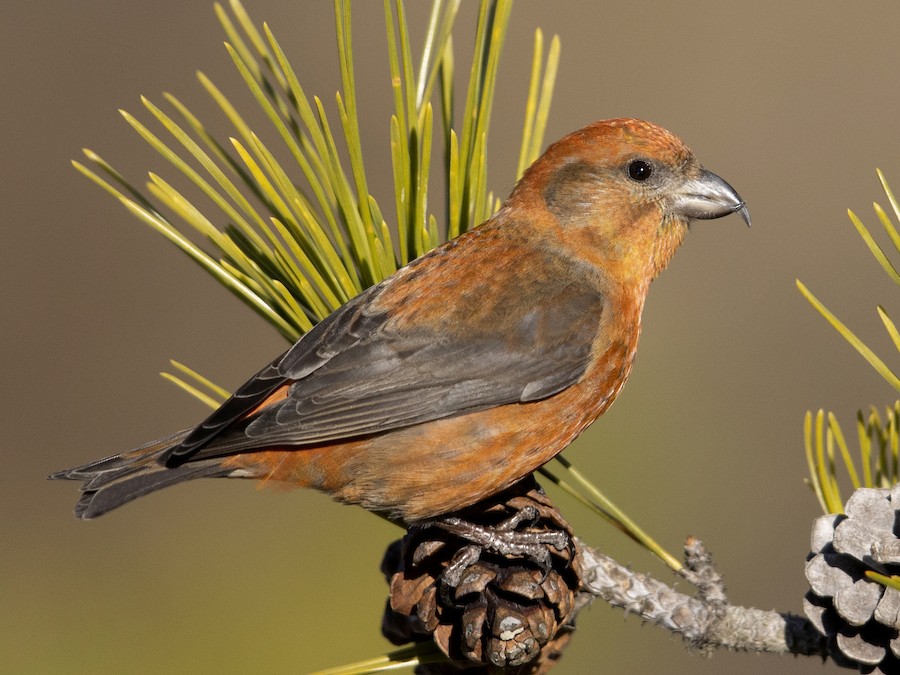
7. Red Crossbill
Red Crossbills are unique finches known for their unusual beaks.
Identification
- Crossed bill tips
- Brick-red males
- Yellowish females
The crossed bill helps them extract seeds from pine cones.
Habitat
They prefer:
- Conifer forests
- Pine forests
Behavior
They often travel in noisy flocks.
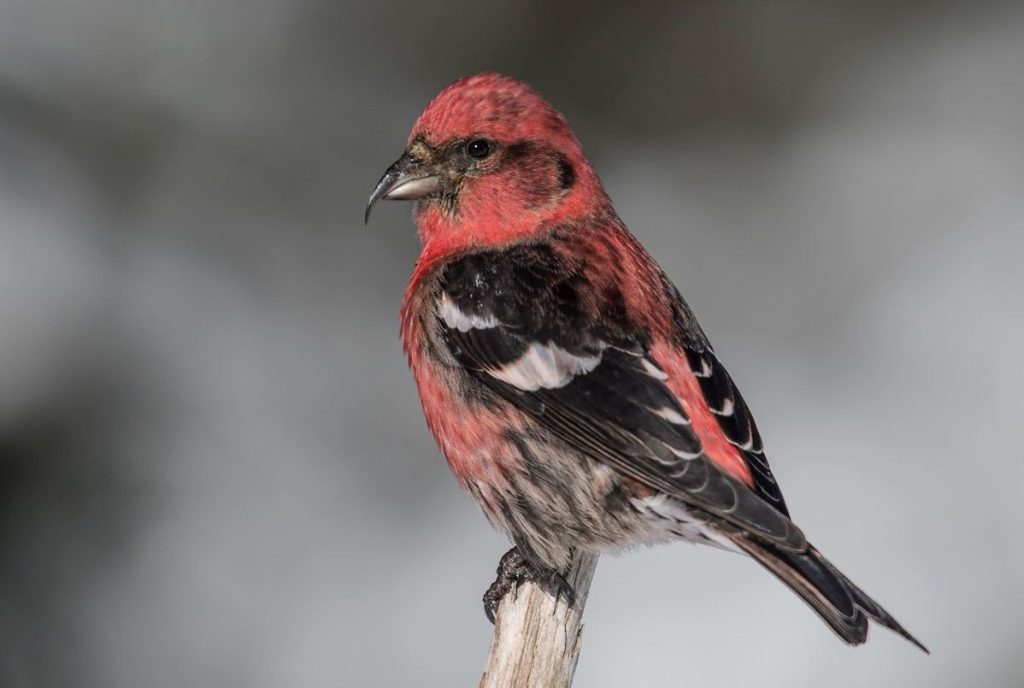
8. White-winged Crossbill
Another specialized finch adapted to conifer forests.
Identification
- White wing bars
- Red body in males
- Yellow-green females
Their distinctive wing markings make them easier to identify than Red Crossbills.
Habitat
They favor:
- Spruce forests
- Boreal woodlands
Season
Occasionally seen in northern Michigan.
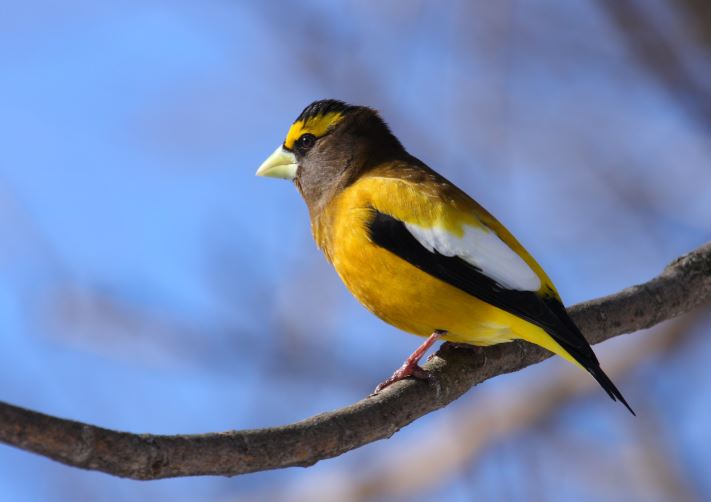
9. Evening Grosbeak
Evening Grosbeaks are large, striking finches.
Identification
Male:
- Bright yellow body
- Black wings
- Thick pale bill
Female:
- Gray body
- White wing patches
Habitat
They prefer:
- Conifer forests
- Mixed forests
Behavior
They sometimes appear at feeders in large noisy flocks.
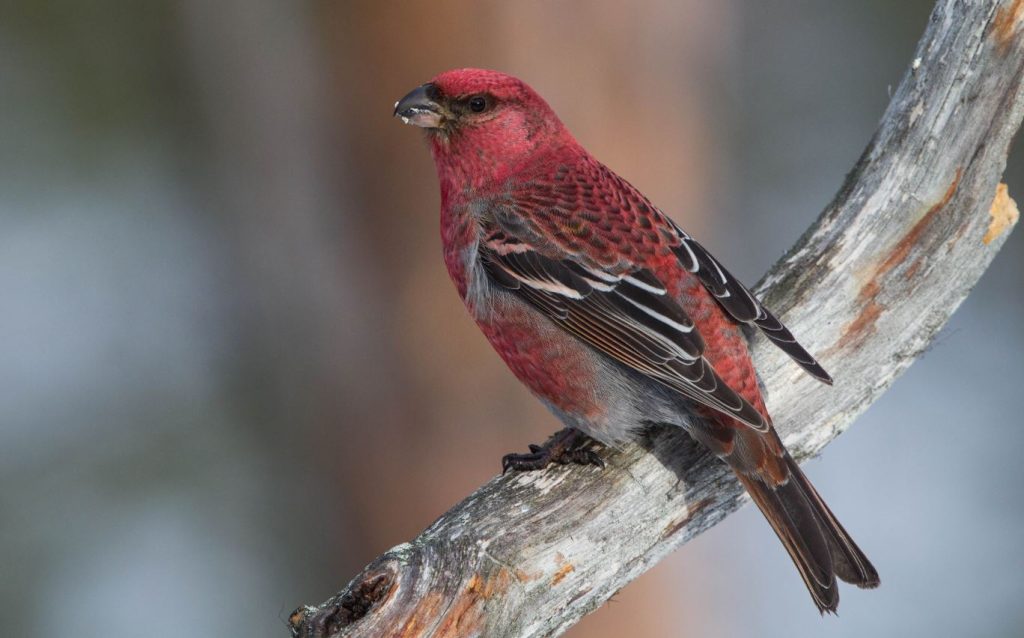
10. Pine Grosbeak
The Pine Grosbeak is the largest finch species in North America.
Identification
Male:
- Rosy red body
- Gray wings
Female:
- Gray body with yellowish head
Habitat
They prefer:
- Boreal forests
- Northern conifer woodlands
Season
Seen in northern Michigan during winter.
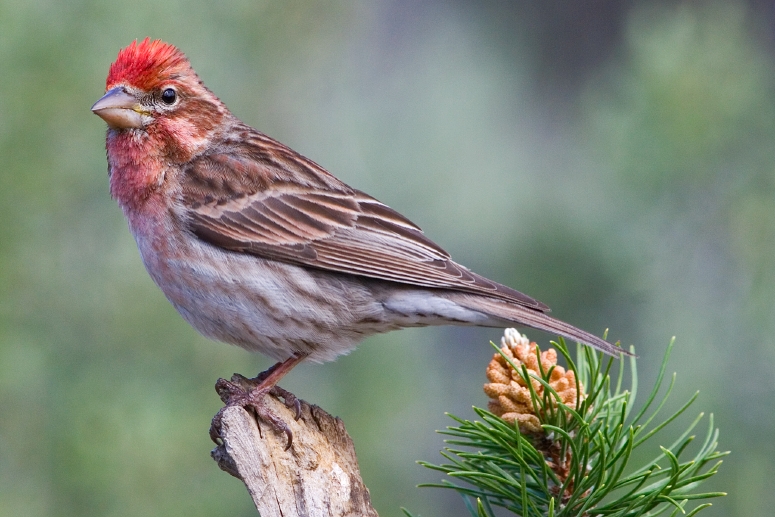
11. Cassin’s Finch (Rare)
Cassin’s Finch normally lives in western North America.
Identification
- Pinkish-red head
- Brown streaked body
- White eye ring
Michigan Status
Extremely rare visitor.
12. Brambling (Accidental Visitor)
Bramblings are Eurasian finches.
Identification
- Orange breast
- Black head
- White belly
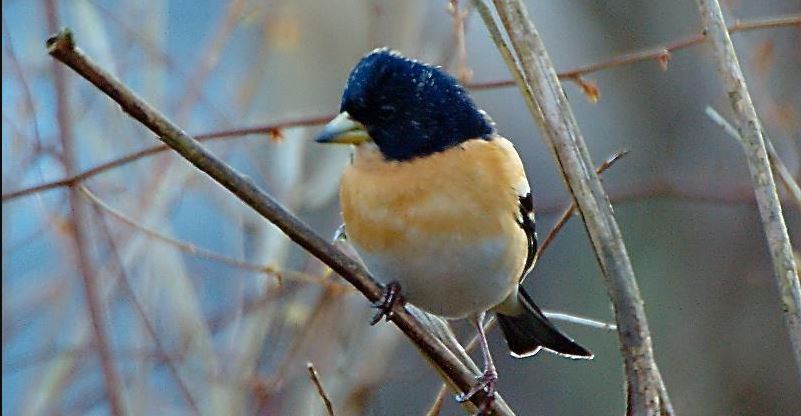
Status
Very rare accidental visitor to Michigan.
Birdwatchers get excited when one is spotted.
13. Gray-crowned Rosy-Finch (Extremely Rare)
This alpine species normally lives in western mountain regions.
Identification
- Gray crown
- Pink body
- Black face
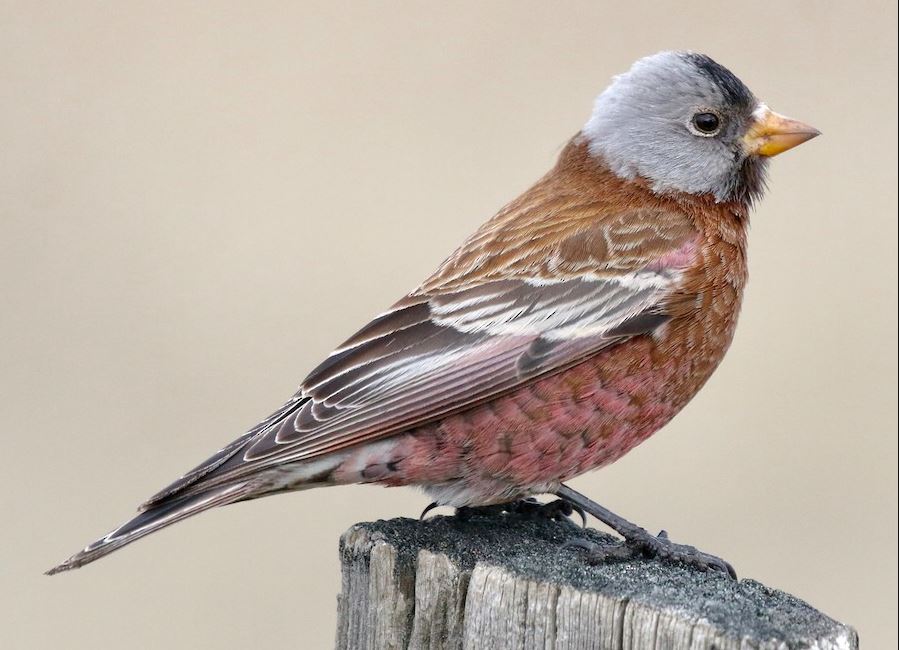
Status
One of the rarest finches ever recorded in Michigan.
Best Places to See Finches in Michigan
Michigan offers many excellent birdwatching locations.
Sleeping Bear Dunes National Lakeshore
This area features forests and open landscapes ideal for finches.
Seney National Wildlife Refuge
Great for spotting winter finches.
Pictured Rocks National Lakeshore
Northern forests attract crossbills and grosbeaks.
Local Parks and Backyard Feeders
Even urban areas can host finches, especially during winter.
How to Identify Finches in Michigan
Learning to identify finches takes practice.
Here are a few helpful tips.
Pay Attention to Bill Shape
Finches have short, thick bills designed for cracking seeds.
Crossbills have the most distinctive bills.
Look at Color Patterns
Bright colors often help identify species:
- Yellow → American Goldfinch
- Red → Purple Finch or House Finch
- Pink → Pine Grosbeak
Listen to Their Songs
Finches are very vocal birds.
Their calls often include:
- High-pitched chirps
- Musical warbles
- Rapid twittering
Birdwatching apps can help identify calls.
Best Bird Feeders for Finches
If you want to attract finches to your yard, try these tips.
Use Nyjer Seed
Nyjer seed is extremely popular with:
- Goldfinches
- Pine Siskins
- Redpolls
Tube Feeders Work Best
Finches prefer tube feeders with small perches.
Plant Native Flowers
Plants such as:
- Sunflowers
- Coneflowers
- Thistles
provide natural food sources.
Best Time of Year to See Finches
Different seasons bring different finches.
Spring
Migration brings species like Purple Finch.
Summer
American Goldfinches are bright yellow and active.
Fall
Seed-eating birds gather in flocks.
Winter
Northern finches such as:
- Redpolls
- Pine Siskins
- Grosbeaks
may visit feeders.
Why Finches Are Important to the Ecosystem
Finches play an important ecological role.
They help:
- Spread plant seeds
- Control insect populations
- Support healthy ecosystems
Their presence also indicates healthy natural habitats.
Final Thoughts
From the cheerful American Goldfinch to the rare Gray-crowned Rosy-Finch, the variety of finches in Michigan makes the state an exciting destination for bird lovers. Whether you’re hiking through northern forests or relaxing with a backyard feeder, these colorful birds bring energy and beauty to Michigan’s landscapes.
With the identification tips and locations in this guide, you’ll be better prepared to recognize each species and enjoy the thrill of spotting these wonderful birds in the wild.
So grab your binoculars, fill your feeder with nyjer seed, and start exploring—the finches of Michigan are waiting to be discovered.