Can Roadrunners Fly? The Surprising Truth Behind These Ground-Racing Birds

When people hear the word roadrunner, many instantly picture the speedy cartoon bird outsmarting a frustrated coyote. But beyond the animation, the real-life roadrunner is a fascinating creature that has captured the attention of birders and biologists alike. One of the most common questions I get during birdwatching sessions is: can roadrunners fly?
Let’s explore the truth behind the roadrunner’s flight capabilities, how they move, why they prefer running, and what this all means for their survival in the wild.
What Is a Roadrunner?
Roadrunners are members of the cuckoo family (Cuculidae), known for their incredible terrestrial speed. There are two species of roadrunners:
- Greater Roadrunner (Geococcyx californianus) – the most widely recognized and found in the southwestern U.S. and Mexico.
- Lesser Roadrunner (Geococcyx velox) – found primarily in Mexico and Central America.
These birds are uniquely adapted to desert and arid environments and are highly terrestrial—spending much of their time on the ground hunting insects, reptiles, and even small birds.
The Big Question: Can Roadrunners Fly?
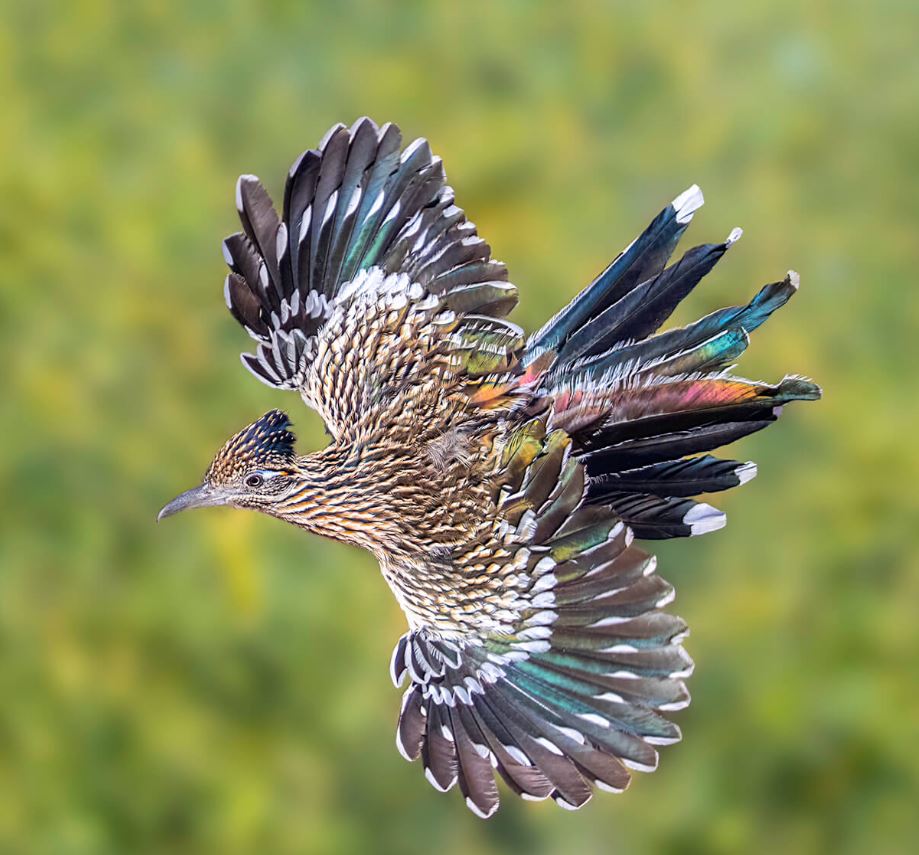
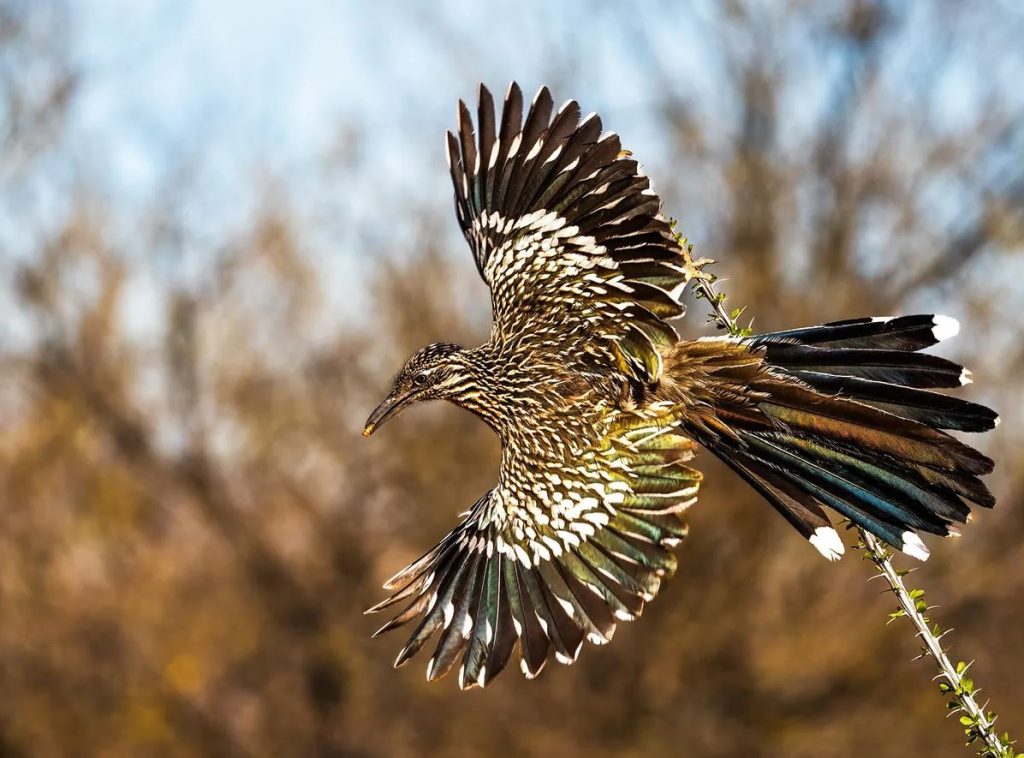
Yes, roadrunners can fly, but they prefer not to. Their flight is typically short, low, and more functional than graceful. If you’ve ever seen one in the wild, you’ve likely noticed they take flight only when necessary—like to escape predators or reach a low perch.
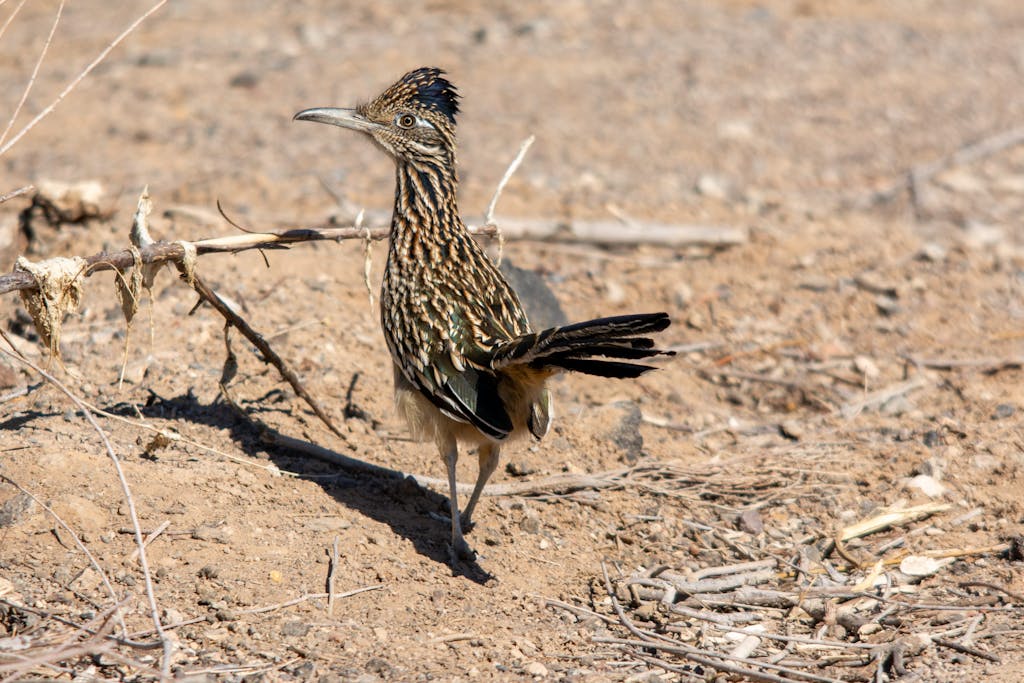
According to the Cornell Lab of Ornithology, roadrunners are capable of flight, but they generally “run or walk with head held level and tail cocked upward,” and take to the air briefly, often gliding short distances or flapping to a low branch or fence post.
Why Don’t Roadrunners Fly Often?
There are several evolutionary and environmental reasons why roadrunners rely more on their legs than their wings:
1. Adapted for Speed on the Ground
Roadrunners can run at speeds up to 20 miles per hour (32 km/h). Some reports suggest even faster bursts. This ability makes them one of the fastest-running birds capable of flight.
Their long, powerful legs and zygodactyl feet (two toes pointing forward, two backward) give them excellent grip and balance for maneuvering over rocky terrain, loose sand, and through dense brush.
2. Wing Shape and Size
Roadrunners have relatively short, rounded wings compared to their body size. This wing shape is not conducive to long-distance or high-altitude flight. Instead, their wings are better suited for short, low bursts of flight—just enough to clear a bush or escape danger.
3. Energy Efficiency
In hot desert climates where water and food can be scarce, conserving energy is critical. Running is much more energy-efficient for roadrunners than flying, which requires a higher metabolic output.
How Do Roadrunners Fly When They Need To?
While they rarely fly, roadrunners have a very specific flight pattern:
- They leap into the air with a few rapid flaps.
- They then spread their wings and glide briefly, usually not more than a few seconds.
- They land quickly, often on a fence, low tree branch, or rock.
You won’t see roadrunners soaring overhead like hawks or migrating in flocks. Their flight is purely practical—used only when walking or running is no longer the best option.
Situations When Roadrunners Fly
1. Escaping Predators
Though fast runners, roadrunners will take to the air when threatened by ground predators such as coyotes, bobcats, or snakes. A quick burst of flight can help them reach cover or a safe perch.
2. Crossing Obstacles
If a fence, ravine, or dense thicket lies in their path, a roadrunner may flap over it briefly and continue running.
3. Perching
Roadrunners sometimes perch in low trees or shrubs to scan the area for prey or predators. This requires a short flight upwards.
Roadrunner vs. Other Ground Birds: A Comparison
To better understand the roadrunner’s limited flight, let’s compare it to a few other birds that share similar ground-running behavior:
| Bird | Can It Fly? | Speed (Ground) | Primary Locomotion |
|---|---|---|---|
| Roadrunner | Yes (short bursts) | Up to 20 mph | Running |
| Ostrich | No | Up to 45 mph | Running |
| Wild Turkey | Yes (short distance) | Up to 25 mph | Running + flight |
| Quail | Yes | Up to 12 mph | Running + flight |
| Chicken | Yes (limited) | ~9 mph | Walking/running |
As the table shows, roadrunners fall somewhere between true flightless birds (like ostriches) and those with more frequent flight habits.
The Biology Behind Their Limited Flight
1. Muscle Structure
Birds that fly long distances have a higher proportion of aerobic (slow-twitch) muscle fibers in their breast muscles. These allow for sustained flapping. Roadrunners have more anaerobic (fast-twitch) fibers, which are excellent for explosive running but not prolonged flight.
2. Keel Bone Size
The keel bone is where a bird’s powerful flight muscles attach. In strong fliers, this bone is prominent. Roadrunners have a reduced keel, meaning their flight muscles are less developed.
My Experience Observing Roadrunners in the Field
During a birdwatching trip in Arizona’s Sonoran Desert, I spotted a Greater Roadrunner dart across a dirt trail. I followed from a distance, watching it hunt a small lizard with stealthy precision. At one point, a cyclist came down the trail—spooking the bird. Without hesitation, it leapt into the air, flapped twice, and glided about ten feet into a mesquite shrub. That moment clearly illustrated how flight is a secondary tool for roadrunners—not their primary mode of movement.
Cultural Myths and Misconceptions
Thanks to pop culture, many assume roadrunners are flightless or cartoonishly fast. While they are indeed fast, the idea that they can’t fly at all is a misconception.
In fact, Native American folklore often portrayed the roadrunner as a symbol of agility and protection, not just speed. The bird’s ability to adapt—by both running and flying when needed—is part of its survival brilliance.
Are Roadrunners Evolving to Be Flightless?
This is a fascinating question. As a birdwatching expert, I’ve spoken with ornithologists who believe that if current trends continue—especially with more roads and open terrain—roadrunners may rely even less on flight. However, complete flightlessness is unlikely without thousands of years of evolutionary pressure.
For now, flight remains in the roadrunner’s toolkit, even if it’s rarely used.
Final Thoughts: Can Roadrunners Fly?
So, let’s return to our central question: Can roadrunners fly?
✅ Yes, they can—but they mostly choose not to.
Their preference for running over flying is a result of brilliant adaptation to their desert environment. Their speed, agility, and strategic use of short flights make them one of the most unique birds in North America.
As a lifelong birdwatcher, I never tire of watching these feathered sprinters in action. Whether racing across the sand or gliding into a low bush, roadrunners are a testament to how birds evolve not just to fly—but to thrive.
FAQs
Do roadrunners migrate?
No, roadrunners are non-migratory and stay in their home range year-round, especially in the southern U.S. and Mexico.
How fast can roadrunners fly?
They don’t fly fast; their flight is slow and brief. Their top running speed—up to 20 mph—is far more impressive.
Can baby roadrunners fly?
Not at first. Fledglings usually take about 2–3 weeks after hatching before attempting short flights.
What do roadrunners use their wings for if they rarely fly?
Aside from brief flights, they use wings in displays (courtship or territorial), balance, and temperature regulation—spreading them to absorb sunlight.