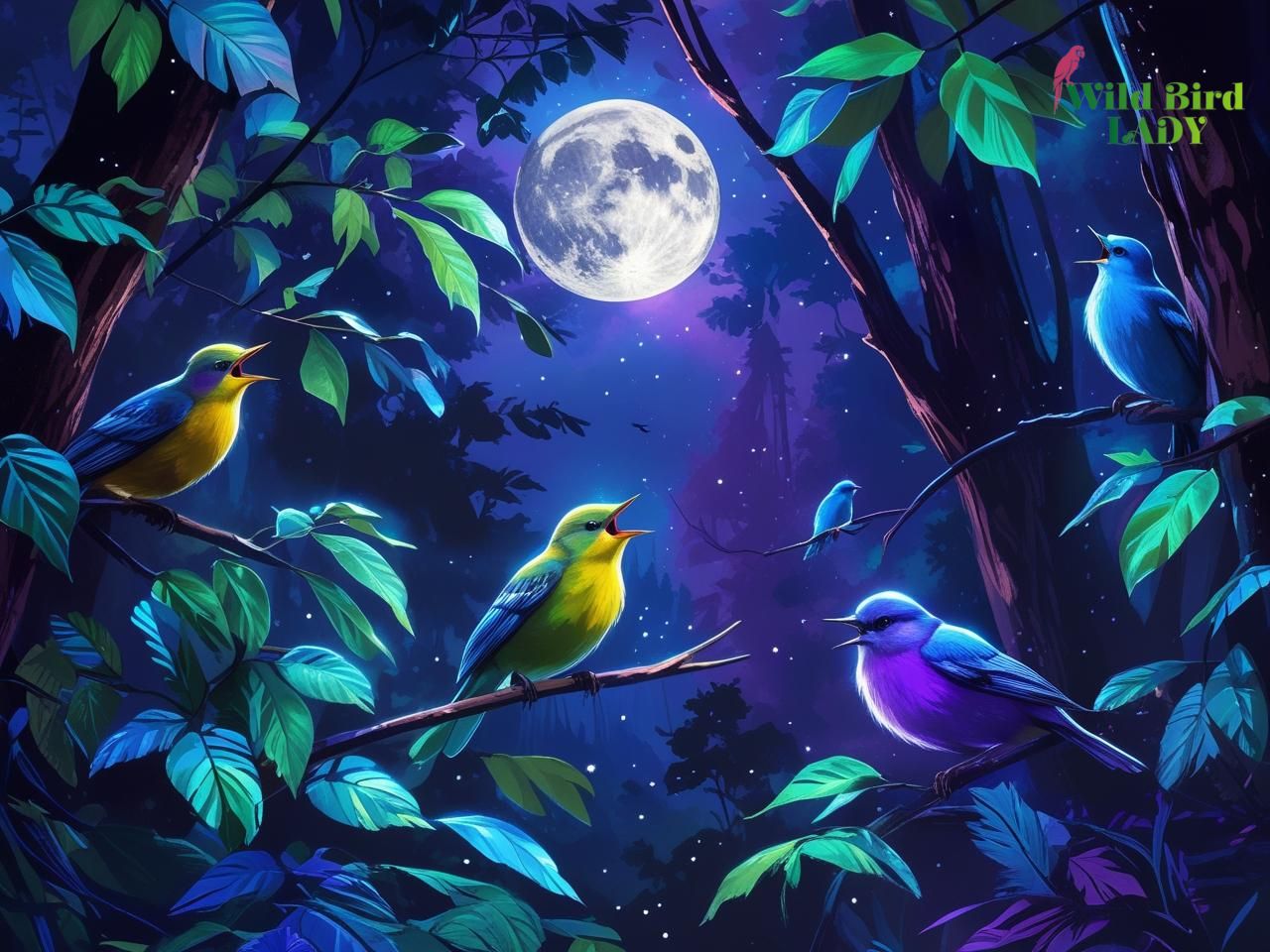
Birds Singing at Night Time: Why They Do It and What It Means

As a birdwatcher with over 13 years of field experience, one of the most mystifying—and frankly beautiful—phenomena I’ve observed is birds singing at night time. The early dawn chorus is well known, but what about those clear, quiet nights when a melodic song floats through the darkness? Why do some birds sing after sunset? Is it normal? Is it just a random occurrence, or does it serve a biological purpose?
In this complete guide, we’ll dive deep into the world of nocturnal bird song. From scientific explanations to species that commonly sing at night, you’ll learn everything you need to know to understand the night-time avian orchestra.
Why Do Birds Sing at Night Time?
Birds primarily sing to mark territory, attract mates, or communicate with their flock. Most species are diurnal (active during the day), so why do some choose to vocalize after dark?
Here are the main reasons:
1. Territorial Communication
Some birds sing at night to stake out territory, especially in densely populated urban environments where daytime noise pollution makes it difficult to be heard.
2. Mate Attraction
Male birds may sing throughout the night during peak breeding season to attract females. This is especially true for species like the Northern Mockingbird, whose complex songs and mimicry intensify at night.
According to All About Birds, the Northern Mockingbird is “one of the few birds in North America known for singing all night long, particularly during the spring mating season.”
3. Artificial Light Triggers
Urban light pollution can confuse birds into thinking it’s still daytime, leading to extended periods of vocalization. This is particularly noticeable in cities, where artificial lighting is constant.
4. Migration Navigation
Many birds migrate at night and may use vocalizations to keep in touch with the flock or avoid collisions. Some species emit flight calls or brief, high-pitched notes while on the move.
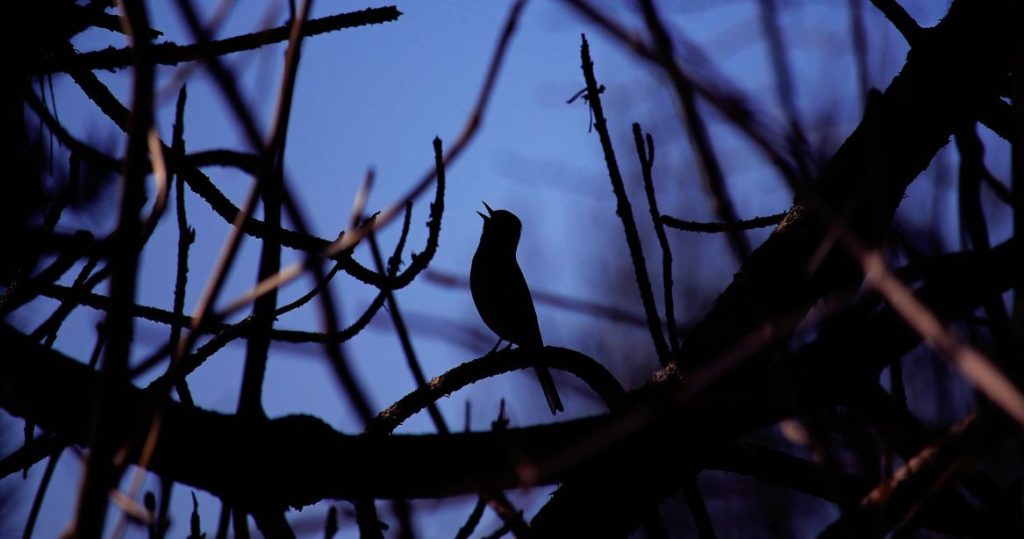
Common Birds That Sing at Night
Over the years, I’ve become familiar with a shortlist of nocturnal singers across the U.S. and beyond. Here are some of the most common culprits:
1. Northern Mockingbird
Famous for their vocal range and mimicry skills, Northern Mockingbirds sing long into the night—especially bachelors during mating season.
Habitat: Suburban areas, open ground, hedgerows
Song: A long series of phrases, each repeated 3–5 times, mimicking other species
2. American Robin
While typically early risers, Robins are known to sing at night in urban areas.
Habitat: Lawns, parks, and backyards
Song: Cheerful phrases, often described as “cheerily, cheer-up, cheerio”
All About Birds notes that “American Robins may sing throughout the night in cities with street lighting.”
3. Eastern Whip-poor-will
A true nocturnal bird, the Whip-poor-will is most active after dusk.
Habitat: Forests and woodlands
Song: A repetitive “whip-poor-will” call, sometimes heard for hours on end
4. Northern Mockingbird
Yes, again. Because this bird is the poster child of nocturnal song, particularly in the southern U.S. during the spring.
5. European Blackbird (in Europe)
If you’re birdwatching in Europe, this thrush species is one of the first to sing at dawn and sometimes late into the night in urban settings.
Is Night Singing Normal or a Sign of Distress?
Hearing birds singing after dark often catches people off guard. While we typically associate birdsong with the dawn chorus, nighttime vocalizations aren’t necessarily abnormal. In fact, from what I’ve observed over the years—and supported by ornithological research—night singing is a natural part of avian behavior for several species, especially during specific times of the year.
When Night Singing Is Normal
The most common reason for birds to sing at night is related to breeding activity. During the spring and early summer, males are driven by hormones to attract mates and defend territory. This heightened competition often results in extended singing periods, even well into the night. For species like the Northern Mockingbird, this behavior is completely normal and expected. They may sing throughout the night during peak mating season, particularly if they haven’t found a mate yet.
Migration is another period when nighttime sounds increase. Many songbirds, including warblers and thrushes, migrate at night to avoid daytime predators and conserve energy. Though these calls are usually short flight calls rather than full songs, they are still part of natural nocturnal behavior.
When It May Signal Distress
That said, not all nighttime singing is benign. In some cases, persistent, erratic, or high-pitched vocalizations could be a sign of stress or disorientation. Here are some potential causes:
- Light Pollution: Birds living in urban environments may become confused by artificial lighting. Streetlights, neon signs, and illuminated buildings can disrupt their circadian rhythms, making them believe it’s still daytime. This often results in birds like robins or sparrows singing long after sunset.
- Noise Pollution: In noisy cities, some birds shift their singing to quieter hours—typically at night—to avoid being drowned out by traffic or human activity.
- Alarm Calls: Agitated chirping, especially in bursts or during sudden disturbances, may indicate the presence of a predator or perceived threat.
In my personal experience, American Robins are especially prone to nighttime confusion in well-lit neighborhoods. I’ve stood under streetlights near shopping centers and heard them singing full songs at 2 a.m.—clearly mistaking artificial light for dawn. While it’s fascinating, it also shows how our modern environment can alter bird behavior in unexpected ways.
Understanding the context of the song—its tone, duration, and frequency—can help you determine whether it’s part of a bird’s natural rhythm or a possible sign of stress.
How Light Pollution Influences Night Singing
Cities never sleep—and in some cases, neither do the birds. Artificial lights trick birds into perceiving a perpetual twilight, extending their singing hours.
A 2016 study published in Proceedings of the Royal Society B found that American Robins in urban areas started singing hours before sunrise due to artificial lighting.
Tips to Reduce Light Pollution:
- Use motion sensors or downward-facing outdoor lights
- Turn off unnecessary lights at night
- Plant trees or shrubs to create darker nesting zones
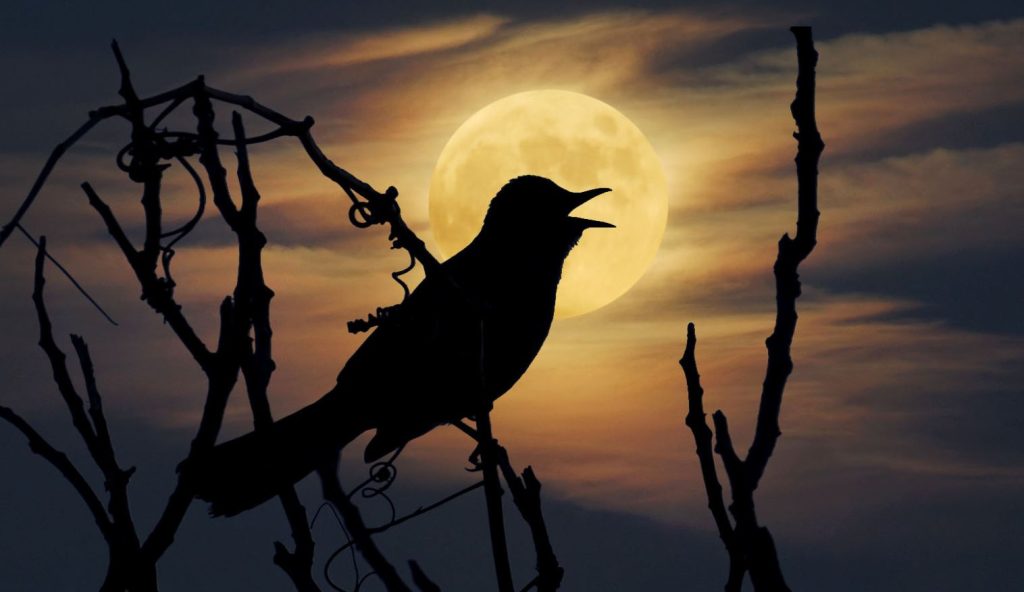
Seasonal Triggers: Breeding and Migration
Birdsong isn’t just a daily occurrence—it’s often seasonal.
Spring and Early Summer
This is prime time for nighttime singing, driven by hormones and the search for a mate. Males ramp up their vocal efforts during courtship.
Fall Migration
Some species, particularly thrushes and warblers, emit short, high-pitched “flight calls” during night migration. These aren’t songs in the traditional sense but are still noticeable to a trained ear.
As reported by All About Birds, “many songbirds migrate at night, calling softly as they travel. These calls can be heard by careful listeners and even picked up by microphones in migration research.”
What to Do if Birds Keep You Awake
While many people find nighttime birdsong relaxing, it can be frustrating if it disrupts your sleep. Here’s how to mitigate the impact:
- White Noise Machines: These can mask bird calls with gentle ambient sounds.
- Close Windows and Use Blackout Curtains: This keeps out both sound and artificial light.
- Relocate Feeders or Nesting Boxes: If possible, move these away from bedroom windows.
- Avoid Outdoor Lighting Near Trees: Bright lights near nesting spots can encourage singing at night.
How to Identify Birds Singing at Night
Nighttime birding is challenging but deeply rewarding. Here are some tips to identify night singers:
1. Use Birding Apps
Apps like Merlin Bird ID (by Cornell Lab of Ornithology) can identify species by sound, even at night.
2. Record and Replay
Record the sound on your phone and analyze the spectrogram using tools like Raven Lite.
3. Note Time and Location
Some birds are more likely in certain regions or habitats. For example:
- Robins in suburban yards
- Mockingbirds in southern states
- Whip-poor-wills in forest edges
Final Thoughts from 13 Years of Nighttime Observation
From my early days birdwatching in rural Bangladesh to quiet evenings in U.S. suburbs, I’ve come to appreciate the nocturnal songs as nature’s lullaby and, at times, its loudest declaration of life.
What sounds like chaos to some is a symphony to those who listen closely. Each nighttime note reveals something about survival, adaptation, and communication. Whether it’s a lovesick mockingbird or a robin confused by streetlights, these calls are deeply rooted in evolution and environment.
If you hear birds singing at night time—pause. Step outside. Listen. You may just witness a secret side of nature most people sleep through.
FAQs About Birds Singing at Night
1. Is it rare for birds to sing at night?
Not at all. While most birds are diurnal, several species sing at night—especially during mating or migration seasons.
2. What’s the most common bird that sings at night in the U.S.?
The Northern Mockingbird is the most consistent and loud night singer, especially in spring and summer.
3. Can artificial lights cause birds to sing at night?
Yes. Light pollution can disrupt a bird’s circadian rhythm, making them believe it’s still day.
4. Are night singers the same as nocturnal birds?
Not always. Some birds that sing at night (like the American Robin) are diurnal but may sing due to environmental triggers.
5. What should I do if birds singing at night disturb my sleep?
Use white noise, close your windows, or reduce local lighting to help minimize disruption.
If you enjoyed this guide, check out my other bird behavior breakdowns at WildBirdLady.com—and don’t forget to share your own night-birding experiences with me!