What Do Puffins Eat? Fascinating Feeding Habits of the “Clown of the Sea”

With their colorful beaks, bright orange feet, and comical expressions, puffins are among the most beloved seabirds in the world. Often nicknamed the “Clown of the Sea,” these charming birds attract birdwatchers and nature lovers wherever they appear along coastal cliffs. But beyond their adorable appearance lies an impressive lifestyle built around survival in harsh ocean environments.
Many people who spot these birds for the first time ask the same question: what do puffins eat?
The answer reveals a fascinating story of underwater hunting, seasonal feeding strategies, and incredible adaptations that allow puffins to thrive in cold ocean waters. In this guide, we’ll explore what puffins eat, how they catch their prey, how their diet changes throughout the year, and the best seasons and locations to see puffins in the wild.
What Are Puffins?
Before diving into their diet, let’s briefly understand these remarkable seabirds.
Puffins belong to the auk family and are closely related to murres and guillemots. The most famous species include:
- Atlantic Puffin
- Horned Puffin
- Tufted Puffin
Among them, the Atlantic Puffin is the species most commonly seen along the coasts of Europe and North America.
Puffins spend most of their lives at sea, only coming to land during the breeding season to nest in burrows on coastal cliffs and islands.
What Do Puffins Eat?
Puffins are carnivorous seabirds, and their diet mainly consists of small fish and marine creatures.
The most common foods puffins eat include:
- Small fish
- Sand eels
- Herring
- Capelin
- Anchovies
- Crustaceans
- Marine worms
- Squid
Fish make up the majority of their diet, especially during the breeding season when adults must feed hungry chicks.
The Main Fish Puffins Eat
While puffins eat many marine animals, several fish species make up the core of their diet.
Sand Eels
One of the puffin’s favorite foods is the Sand eel.
These slender fish live in sandy seabeds and often swim in large schools near the ocean surface. Puffins catch them during shallow dives.
Sand eels are especially important during the chick-rearing season because they are:
- High in protein
- Easy to catch
- The perfect size for puffin chicks
Herring
Puffins also eat Atlantic Herring, a common schooling fish found in cold northern waters.
Herring provide:
- Healthy fats
- High energy content
These nutrients help adult puffins maintain their energy during long feeding trips.
Capelin
Another common prey is the Capelin, a small fish related to smelt.
Capelin are rich in oils and nutrients, making them an excellent food source for both adult puffins and their chicks.
Anchovies
In some regions, puffins feed on Anchovy.
These small fish travel in dense schools, allowing puffins to capture several in a single dive.
How Puffins Catch Their Food
Puffins are surprisingly skilled hunters.
Although they look clumsy on land, they are powerful swimmers underwater.
Diving for Fish
Puffins dive into the ocean using their wings as underwater “flippers.”
Typical diving behavior includes:
- Diving 20–60 feet deep
- Staying underwater for up to 30 seconds
- Chasing fish through the water
Their feet act like rudders, helping them steer quickly while pursuing prey.
Carrying Multiple Fish at Once
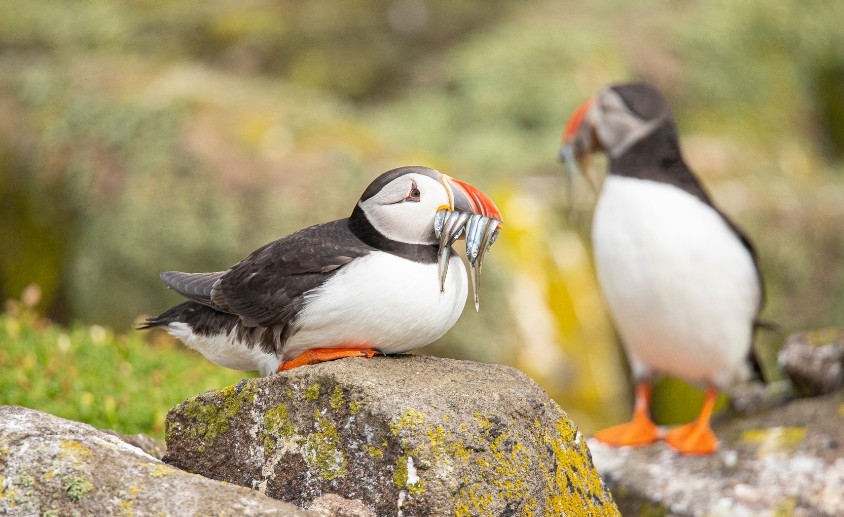
One of the most amazing puffin abilities is their talent for carrying many fish in their beaks simultaneously.
Special grooves and spines in their beaks allow puffins to hold fish securely while catching additional ones.
Some puffins have been recorded carrying more than 10 fish at once.
This ability helps them deliver large meals to chicks waiting in their burrows.
What Do Baby Puffins Eat?
Baby puffins are called pufflings.
Pufflings eat the same foods as adults, mainly:
- Sand eels
- Small herring
- Other small fish
Parents bring fish back to the nest several times per day. The chicks grow rapidly and may double their weight within weeks.
Because puffins only raise one chick per year, feeding that chick efficiently is essential for survival.
Seasonal Changes in Puffin Diet
Like many seabirds, puffin diets change depending on the season and food availability.
Spring and Summer
During the breeding season, puffins rely heavily on small fish such as:
- Sand eels
- Herring
- Capelin
These fish are abundant near nesting colonies.
Adults must gather enough food not only for themselves but also for their chicks.
Fall and Winter
Outside the breeding season, puffins spend most of their time far from land.
During winter, their diet may expand to include:
- Small squid
- Crustaceans
- Marine worms
- Different fish species
Because puffins live far offshore during this time, scientists know less about their winter feeding habits.
How Much Do Puffins Eat?
An adult puffin typically eats dozens of small fish per day.
During chick-rearing season, parents must catch even more fish.
A single feeding trip may deliver 5–20 fish to the nest.
Puffins may travel several miles offshore to find the best fishing areas.
Puffin Adaptations for Hunting
Puffins have several physical features that make them excellent hunters.
Waterproof Feathers
Their dense feathers trap air, keeping them warm and dry in cold ocean water.
Strong Wings
Although puffins appear awkward in the air, their wings are powerful enough to propel them underwater.
Colorful Beaks
The puffin’s famous beak becomes brighter during breeding season. It also has specialized ridges that help hold multiple fish.
Excellent Vision
Puffins can see clearly both above and below water, helping them track fast-moving fish.
Where Do Puffins Live?
Puffins live in cold northern oceans across the Atlantic and Pacific.
The Atlantic Puffin is found in:
- Iceland
- Norway
- Scotland
- Ireland
- Greenland
- Canada
- Maine in the United States
Meanwhile, Horned Puffin and Tufted Puffin inhabit the Pacific Ocean.
Best Season to See Puffins
If you want to see puffins in the wild, timing your visit is important.
Puffins only come to land during the breeding season, which usually runs from late spring through summer.
Typical viewing months include:
- April – Puffins begin returning to nesting colonies
- May to July – Peak nesting and chick-rearing season
- August – Many puffins begin leaving colonies
During this time, thousands of puffins gather on cliffs and offshore islands.
Best Places to See Puffins
Here are some of the best locations in the world to watch puffins.
Iceland
Iceland is home to the largest puffin population on Earth.
Top viewing locations include:
- Látrabjarg Cliffs
- Westman Islands
These cliffs host millions of puffins during summer.
Scotland
Scotland is another fantastic destination for puffin watching.
Great locations include:
- Isle of May
- Staffa
Boat tours often bring visitors close to nesting colonies.
Norway
Norway’s dramatic coastal cliffs host large puffin colonies.
One famous site is:
- Runde Island
Thousands of puffins nest here each summer.
United States
In North America, puffins breed mainly along the coast of Maine.
The best viewing spot is:
- Machias Seal Island
Guided tours allow visitors to observe puffins safely without disturbing them.
Why Puffins Are Important to Ocean Ecosystems
Puffins play an important role in marine ecosystems.
By feeding on small fish, they help regulate fish populations and maintain ecological balance.
They also serve as indicator species, meaning their population health reflects the condition of ocean ecosystems.
If fish populations decline due to climate change or overfishing, puffins are often among the first birds affected.
Threats Facing Puffins
Despite their popularity, puffins face several challenges.
Major threats include:
- Climate change
- Overfishing
- Pollution
- Oil spills
- Habitat disturbance
In some regions, declining fish populations have reduced food availability for puffins and their chicks.
Conservation programs are working to protect puffin nesting colonies and ensure sustainable fish populations.
Fascinating Facts About Puffins
Puffins are full of surprising traits.
- Puffins can fly at speeds up to 55 mph.
- They flap their wings up to 400 times per minute while flying.
- Their colorful beaks fade to dull gray during winter.
- Puffins can live 20 years or longer in the wild.
Despite their playful appearance, puffins are highly adapted survivors of the harsh northern oceans.
Final Thoughts
So, what do puffins eat?
These charming seabirds rely mainly on small fish such as sand eels, herring, capelin, and anchovies, which they catch during remarkable underwater dives.
Their unique ability to carry multiple fish at once allows them to efficiently feed their chicks during the breeding season.
Whether diving beneath icy waves or nesting on dramatic coastal cliffs, the Atlantic Puffin truly earns its nickname as the “Clown of the Sea.”
If you ever visit northern coastlines during summer, keep an eye on the cliffs—you might just see these colorful birds returning from the ocean with a beak full of fish.