What Do Osprey Eat? How This Bird of Prey Catches Fish Mid-Flight

If you’ve ever watched a large raptor hovering over a lake before suddenly plunging feet-first into the water, you may have witnessed one of nature’s most impressive hunting displays. That bird is likely the Osprey, a remarkable bird of prey known for its extraordinary fishing skills. But many wildlife enthusiasts still wonder: what do osprey eat?
Unlike most raptors that hunt mammals or birds, osprey specialize almost entirely in catching fish. Their hunting technique, physical adaptations, and aerial agility make them one of the most efficient fish hunters in the animal kingdom.
In this detailed guide, we’ll explore what osprey eat, how they catch fish mid-flight, where they hunt, and why these birds play an important role in aquatic ecosystems.
What Do Osprey Eat?
The diet of the Osprey is remarkably specialized. Around 99% of their diet consists of fish, making them one of the few birds of prey that rely almost entirely on aquatic prey.
Osprey usually catch fish that are:
- Near the surface of the water
- Between 4 and 12 inches long
- Light enough to carry in flight
Their diet can vary slightly depending on location, but fish remain the dominant food source everywhere osprey live.
The Top Fish Osprey Eat
Osprey are opportunistic fish hunters, meaning they eat whatever fish species are most abundant in their hunting areas.
Some common fish species osprey prey on include:
- Trout
- Bass
- Carp
- Flounder
- Perch
- Catfish
- Mullet
- Pike
In coastal areas, osprey may also catch:
- Herring
- Mackerel
- Small salmon
Their flexible diet helps them thrive in many environments, from inland lakes to coastal estuaries.
How Osprey Catch Fish Mid-Flight
One of the most fascinating aspects of osprey behavior is how they hunt fish from the air.
The hunting process usually follows several steps.
1. Scanning the Water from Above
Osprey often fly 30 to 130 feet above the water, searching for fish near the surface.
They have excellent eyesight that allows them to detect fish even through reflections on the water.
Sometimes osprey hover briefly while focusing on potential prey.
2. Locking Onto a Target
Once a fish is spotted, the osprey adjusts its position in the air.
The bird carefully calculates:
- Distance to the fish
- Depth below the surface
- Speed of the fish’s movement
This precise targeting helps ensure a successful strike.
3. The Dramatic Dive
When ready to attack, the osprey performs a spectacular dive.
The bird plunges toward the water at high speed, often with:
- Wings partially folded
- Talons extended forward
Unlike many birds, osprey enter the water feet-first, sometimes submerging completely.
4. Grabbing the Fish
At the moment of impact, the osprey extends its powerful talons and grabs the fish.
Special adaptations allow them to grip slippery prey securely.
Their feet have:
- Sharp curved talons
- Rough pads called spicules
- A reversible outer toe for better grip
These features make osprey incredibly effective fish catchers.
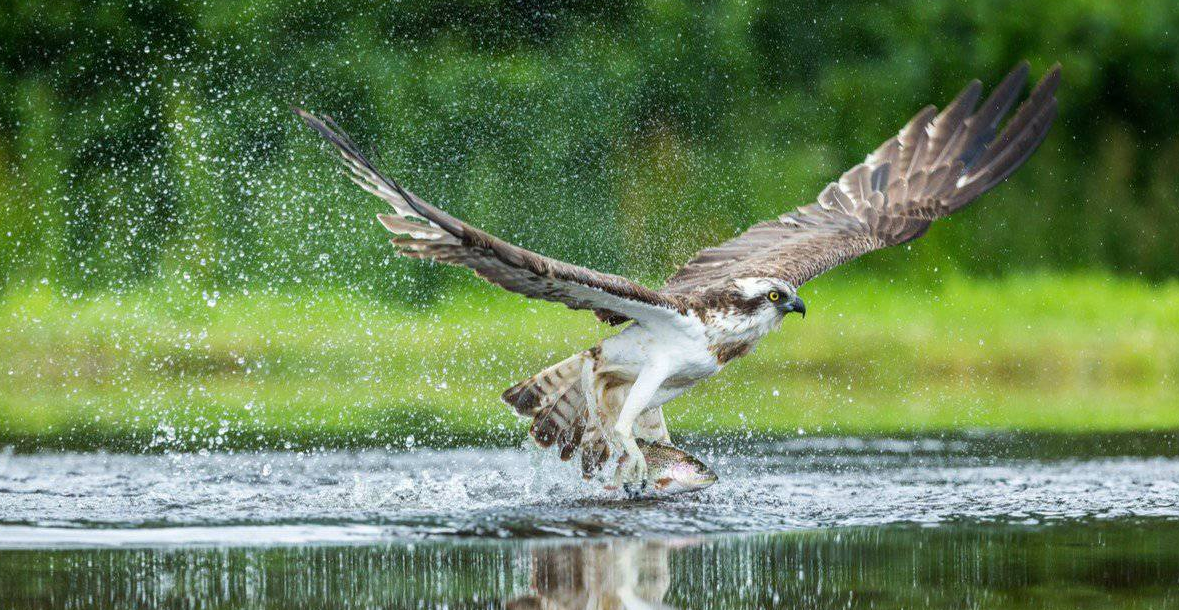
5. Taking Off with the Catch
After grabbing the fish, the osprey beats its wings strongly to lift off from the water.
Once airborne, the bird rotates the fish so its head faces forward, reducing wind resistance during flight.
This aerodynamic adjustment helps the osprey carry fish long distances back to its nest or perch.
Unique Adaptations That Help Osprey Hunt Fish
The Osprey has several specialized features that make it one of the best fishing birds in the world.
Reversible Outer Toe
Most birds have three toes facing forward and one facing backward.
Osprey can rotate one toe, allowing them to hold fish with two toes in front and two behind.
This grip is similar to an eagle’s and provides extra stability.
Spiny Foot Pads
Osprey feet have tiny spikes called spicules.
These help grip slippery fish and prevent them from escaping.
Waterproof Feathers
Because osprey frequently dive into water, they have dense, water-resistant feathers.
This helps them dry quickly after hunting.
Specialized Nostrils
Osprey nostrils can close when the bird dives into water.
This prevents water from entering their respiratory system during deep plunges.
Where Osprey Hunt for Food
Osprey are found near bodies of water with healthy fish populations.
Common hunting habitats include:
- Lakes
- Rivers
- Reservoirs
- Coastal bays
- Marshes
- Estuaries
These birds prefer areas where fish swim near the surface, making them easier to catch.
How Much Fish Do Osprey Eat?
Adult osprey typically eat one to three fish per day.
The amount depends on:
- Fish size
- Weather conditions
- Whether the bird is feeding chicks
During breeding season, osprey must catch additional fish to feed their young.
A nest with hungry chicks may require several fish deliveries per day.
What Do Baby Osprey Eat?
Young osprey eat the same food as adults: fresh fish.
After catching fish, the parent osprey tears the prey into small pieces and feeds them to the chicks.
Fish provide the protein and nutrients needed for rapid growth.
Within a few weeks, young osprey grow strong enough to begin practicing flight.
Do Osprey Ever Eat Other Animals?
Although fish make up almost their entire diet, osprey occasionally eat other animals.
Rare prey may include:
- Small birds
- Frogs
- Snakes
- Small mammals
However, these foods are uncommon and usually eaten only when fish are scarce.
When Do Osprey Hunt?
Osprey are diurnal hunters, meaning they hunt during daylight hours.
They are most active:
- Early in the morning
- Late in the afternoon
These times often coincide with peak fish activity near the water surface.
Why Osprey Are Called the “Fish Hawk”
Because of their fish-based diet, osprey are sometimes called “fish hawks.”
This nickname reflects their extraordinary fishing abilities.
Unlike many hawks that hunt rodents or birds, osprey specialize in aquatic prey.
This unique feeding niche allows them to coexist with other raptors without competing for the same food sources.
Osprey and Ecosystem Health
The Osprey plays an important role in maintaining balanced aquatic ecosystems.
By catching fish, they help regulate fish populations and remove weak or injured individuals.
Because osprey depend on healthy waterways, scientists often consider them indicator species.
If osprey populations decline, it may signal problems with water quality or fish populations.
Conservation Success of Osprey
In the mid-20th century, osprey populations declined due to pesticides such as DDT.
This chemical caused eggshell thinning, which led to breeding failures.
After DDT was banned in the United States in 1972, osprey populations rebounded dramatically.
Today, conservation programs and artificial nesting platforms have helped osprey recover in many parts of the world.
Fascinating Facts About Osprey Feeding
Osprey have some incredible feeding behaviors:
- Their hunting success rate can reach 70–80%, which is very high for birds of prey.
- They can carry fish weighing up to half their own body weight.
- Osprey sometimes shake water from their feathers mid-air after leaving the water.
- They often return to the same fishing locations repeatedly.
These adaptations make osprey one of the most efficient fish hunters on Earth.
Final Thoughts
So, what do osprey eat?
These incredible birds of prey rely almost entirely on fish, which they capture using one of the most dramatic hunting techniques in the natural world. With powerful talons, reversible toes, and exceptional eyesight, the Osprey can dive from the sky and grab fish directly from the water’s surface.
Their remarkable fishing abilities not only help them survive but also support the balance of aquatic ecosystems.
Next time you see an osprey hovering over a lake or river, keep watching—you might just witness one of nature’s most thrilling aerial fishing dives.